

- Scheduling
- Eligibility
- Provider workflow
- Patient communication
- AI Receptionist
- Task automation
Behavioral Health Practice Operating System
Manage the Complete
Patient-to-Payment Cycle
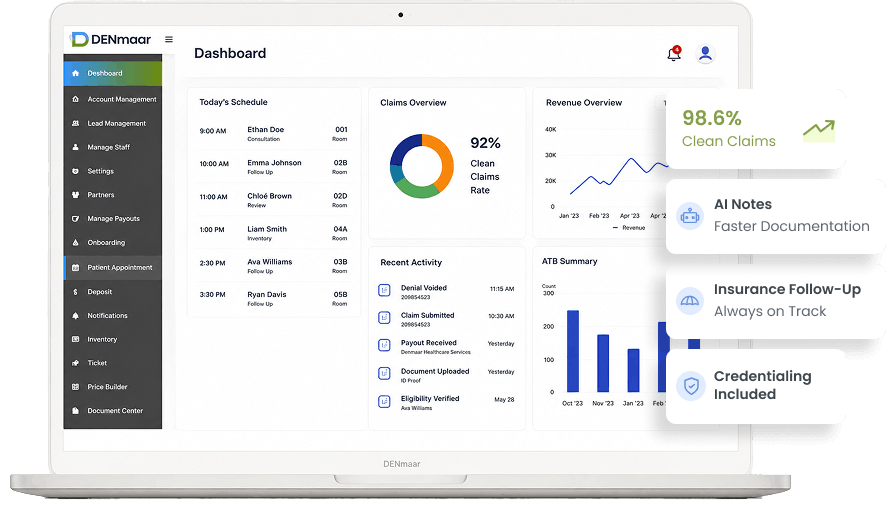
From the first patient call through scheduling, documentation, claims, and payment, DENmaar connects the work of your practice and automates routine steps.

Run your entire practice from one intelligent platform backed by behavioral health expertise.

AI-powered workflows
Behavioral health expertise
ONE INTEGRATED PLATFORM
Four Solutions. One Platform.
Everything growing behavioral healthcare organizations need to run a modern practice.
AI Clinical Documentation
Create therapy, psychiatry, group, and multidisciplinary documentation in minutes with AI designed specifically for behavioral healthcare.
Revenue Cycle Management
Professional insurance billing, payment posting, denial management, patient responsibility, eligibility verification, credentialing, and financial reporting.
More than software.
A complete revenue cycle solution.

AI Practice Automation
Administrative work should happen automatically whenever possible.
Insurance Knowledge Team
Healthcare reimbursement is constantly changing. DENmaar includes access to an expanding insurance knowledge platform built specifically for behavioral healthcare.
Get guidance on:
- Coding
- Prior authorization
- Documentation
- Claim resolution
- Medical necessity
- Credentialing
- Insurance requirements
- Best practices
Built from thousands of real-world behavioral health billing scenarios.

BUILT TO SCALE WITH YOU
Designed for Growing Practices
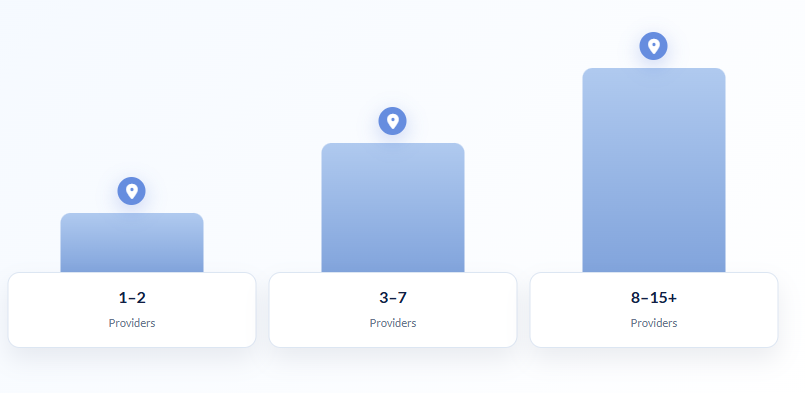
Whether you’re adding your second provider or expanding into multiple locations, DENmaar grows with your organization.
Start simple.
Get up and running quickly with the essentials.
Add capabilities
Unlock advanced features as your needs grow.
Never outgrow
A platform that scales with your vision.
THE DENMAAR DIFFERENCE
Why DENmaar?
Most vendors sell software. Others sell billing services. DENmaar combines technology, AI, revenue
cycle management, and behavioral health expertise into one integrated platform.
Most vendors sell software.
Technology without the operational expertise to connect the pieces.
Others sell billing services.
Services without the intelligent platform to automate your practice.
DENmaar combines it.
Technology, AI, revenue cycle management, and behavioral health expertise into one integrated platform.
Enterprise Capability.
Small Practice Simplicity.
Schedule Your Personalized Demo
See how DENmaar can help your practice grow with confidence.
Let’s Determine Whether There Is Operational Alignment
We begin with a discussion focused on:
- Organizational structure
- Insurance workflows
- Operational goals
- Implementation fit
Request Information
Capterra, Software Advice And Get App 2023 / 25
Best Of Badges Awarded To DENmaar
2023 / 25 “Best of” badge winners = DENmaar Neuro has earned a well-deserved Best Value Badge.
See our reviews for our software being recognized as an impactful solution for your business.





Our Latest Blogs

What is an EMR system? What are the types, benefits, and features of an EMR system?
Electronic medical records
Electronic Medical Records (EMR) stores and retrieves patient records from your server, eliminating hundreds of manual files from your filing cabinet.
Electronic medical records (EMR) make it easy for doctors, nurses, and patients to access information quickly. You may think digital records are less secure than manual records, and you couldn’t be wrong. Since passwords and biometric scanners can be used to restrict access, documents become more confident. Recent growth in the use of electronic medical records (EMRs) has led to the development of services to transfer records from paper to digital files, which can be uploaded to the EMR system.
In general, EMR software records digital data that can be used to monitor and track patient health. Additionally, EMR systems provide the opportunity to review files remotely, with multiple people reviewing charts simultaneously, so that handwriting or other confusions that occurred in the past are no longer a concern.
How is it different from electronic health records?
Contrary to popular misconception, an electronic medical record (EMR) is not an electronic health record (EHR). Although both systems are similar in use and capabilities, they are not interchangeable for the needs of clinicians. An electronic health record focuses on the overall health of your patients. Electronic medical records usually do not comprehensively capture a patient’s medical history.
If patients change hospitals, clinics, or doctors outside their current network, they may not be able to bring their electronic medical records.
Medical offices can keep better and more secure records with the help of electronic medical record systems. Unlike electronic health record software, electronic medical records cannot be easily transferred. Compared to more robust EHR software systems, EMRs come with lower costs and fewer implementation challenges.
The choice between electronic medical and health records depends on which functions are most useful for the hospital, office, or clinic.
Main functions of EMR
Doctors and clinicians have more ways to record and use patient information with electronic medical records. Clinics and hospitals better control health data by replacing paper records with digital software. Electronic medical records (EMR) systems have several key features for physicians and their patients.
Simplified Charting: The information is stored in a secure digital space when a new diagnosis is made. You don’t need to manage multiple plans for multiple patient appointments. Additionally, you can read digital records more accurately and clearly.
Electronic Prescriptions: Most electronic medical records have electronic prescribing functionality, allowing pharmacies to receive prescriptions faster. Doctors can also get suggestions about drug interactions and dosage amounts with this feature.
Patient Portal: Medical information from electronic medical records can be directly accessed by patients. The most effective EMR systems provide secure online access to patients’ medical history, medications, lab results, and past hospital and clinic visits.
Decision Support: Most EMRs can benefit from a helpful patient portal built into them, with various functions that help patients manage specific aspects of their health care. The patient is informed about upcoming treatments, recommendations for particular procedures, and reminders about scheduled treatments.
Order Entry: Electronic medical records help physicians store and distribute lab test orders. With electronic medical records (EMR) systems, the system is less likely to be misplaced. Additionally, errors are filtered out of the system before they become problems. Healthcare organizations and patients save money and time in the long run by not having to repeat tests.
Advantages of electronic medical records
Healthcare providers can take advantage of the many benefits that electronic medical records provide. While this list is not exhaustive, it gives an idea of how electronic medical record software can improve patient care and record management.
Coordination of Care: The EMR allows providers to track patients’ progress from their first visit to their follow-up appointment. This picture is necessary for coordinating medication, therapy, and laboratory tests. All medical records will be available to patients to coordinate care with other clinics if required.
Improve patient care: Unlike paper records, doctors using EMR records can view patient information differently. Patient health outcomes are expected to improve in the long term. Weight, cholesterol levels, blood pressure, and other health data can be used to generate valuable charts through electronic medical records. The better information a doctor gathers over time, the better they can diagnose potential health problems.
Minimal Medical Errors: Patients and doctors can rest assured that their information is the most up-to-date and accurate with electronic records. Conversely, paper records can become missing or illegible, leading to misdiagnosis or incorrect prescriptions.
Efficiency: Healthcare facilities and clinics can operate more efficiently with electronic medical records. Administrative staff no longer need to file and store large documents in a safe and secure location.
EMRs also prevent doctors from recommending unnecessary tests to their patients. This simplification of information saves patients and providers money and time.
Types of EMR Software
Any hospital or medical provider can easily accept electronic medical records. You can choose from a range of electronic medical record system options. The choice of an EMR system ultimately depends on medical providers’ individual needs and capabilities.
Conclusion
Healthcare is an ever-evolving technology industry. Electronic medical record systems represent a way to improve the quality of medical care for many physicians and health care providers.
Although EHRs are more comprehensive than EMRs, EMRs improve health outcomes for patients. Doctors can periodically monitor patient data, schedule preventive appointments, manage medical treatments and monitor chronic diseases.
DENmaar’s medical EMR and EHR systems provide all the above benefits. Call us now!

Top 10 advantages of outsourcing your behavioral health billing
Why Outsourcing Your Behavioral Health Billing Is Beneficial
Healthcare is complicated, especially with many regulations that constantly add additional layers. Healthcare providers spend more time and resources organizing patient care and can use this time better. Using a qualified, outsourced behavioral security billing company can serve you well while reducing your workload, experiencing less disruption, and increasing your profitability.
10 Benefits of Outsourcing Your Behavioral Health Bills
1. Reduce staff costs.
When you outsource behavioral/mental health billing, you are not responsible for employee health care, acquisition costs, PTO (Paid Time Off), and other employee costs. The resources required to manage the behavioral health insurance process are high. Another point of using this behavioral billing solution is the cost-sharing model. It allows billing costs based on your size and revenue. It is advantageous if you have a low-income month; no fixed price will be associated with your billing.
2. Improve the revenue cycle.
As behavioral health providers’ legal and administrative terms grow and the claims process becomes more complex, working with a skilled and trained behavioral health billing company can provide significant relief. RCM, or Behavioral Health Revenue Cycle Management, is a specific application explicitly designed for practices that treat patients with behavioral issues. It helps with payment methods and claims processing more than a generic billing app. It will significantly improve revenue cycle management.
3. Keep patient data secure.
Internet security is one of the main concerns preventing doctors from outsourcing medical billing. Protecting patient and practice data is critical. All professional medical billing companies are responsible for safeguarding all patient information (HIPAA compliance).
4. Reduce employee errors.
Even the most minor fatal mistake can cause an insurance company to deny a medical billing claim; someone on your staff will correct the error, resubmit the application and wait for the revised application to be accepted and processed. Working with a specialized provider reduces employee errors, as they have more experience working with invoicing and have gone through a much greater training process than your in-house team.
5. More consistency.
Due to unplanned staff changes or staff absences, internal billing is at high risk of disrupting your practice revenue. Our outsourced medical billing services provide an entire team of experienced people to ensure your claims are prepared efficiently, reducing the likelihood of disruption to your practice cash flow.
6. Better handling of claims.
Prompt and accurate payment of each insurance claim is essential to optimizing the medical office’s cash flow. Time is precious, and healthcare workers typically do not have the luxury of reviewing and following up on every claim. Let’s face it, healthcare professionals and their support staff are often pulled in different directions. But you must submit these claims as quickly and accurately as possible the first time. Otherwise, unpaid claims can quickly deprive the office of resources you can apply elsewhere. Forcing you to make numerous phone calls to insurance providers only wastes more time and increases frustration. Healthcare providers should consider outsourcing this function to reduce the administrative burden on support staff. Good medical billing companies are quick, consistent, and accurate in filing and processing insurance claims.
7. Transparency.
Others think outsourcing billing means relinquishing control and power to your practice, but that’s only partially true. When you outsource billing, you get more control and transparency. You may review the data collected or monitor the processing at any time at your discretion. It gives you an up-to-date assessment of how and when to handle your clinic bills.
8. Increase profits.
Due to inefficient, inadequate, or incorrect claims, medical providers lose revenue. However, this is not the case if you outsource billing to a pool of eligible behavioral health billers.
These outpatient behavioral health billing professionals are simply experts and far more skilled than your in-house staff. They are adept at handling appeals and reversing denials. They have the insight and experience to identify specific areas of weakness, reduce recurring claims errors and ensure more claims are completed (paid) on the first attempt.
9. Knowledgeable.
Behavioral health external billing solutions come with a wealth of knowledge. They understand the various intricacies of invoicing insurance and know to check trends and spot industry shifts. Longevity is not unusual in this niche area; However, it is necessary. The results from longevity and experience are priceless. Understanding historical trends for each insurance company, the amount paid, accurate printing of documents, etc., can significantly impact your BHO’s ability to collect insurance.
10. Fast action.
Automating routine administrative tasks makes your work more productive and valuable. Automating the same-day claims submission process will increase cash flow. A certified paper claim can take at least two months to travel through all channels before you receive payment. Submitting a clean claim, properly coded for maximum benefit and supported with electronic health records, can result in full reimbursement in a shorter period.
Conclusion
There are many great reasons to outsource your behavioral health bills to a professional group. It makes sense to outsource revenue cycle management services to a third party, which puts less strain on your internal resources. DENmaar provides behavioral/mental health billing services to many behavioral health treatment centers and has many years of experience.
We, DENmaar, can provide these services quickly and affordably, with all kinds of benefits that will accrue to your practice. It has a skilled team of billing and certification professionals dedicated to your medical practice with the expertise in medical billing, accreditation, EMR, and EHR you need. Call us now!
Medical Insurance Credentialing: Everything you need to know to avoid losing money and clients
Accurate and timely acceptance of medical insurance is essential for obtaining payment from insurance companies. It’s complicated, time-consuming, and can cost thousands of dollars if you get it wrong. That’s why it’s important to partner with a medical billing company that has experience and a proven track record of success.
What is Medical Insurance Credentialing?
Insurance companies check that medical providers are legitimate and eligible to be compensated for services rendered. When a particular payer credentials a service provider, they can bill the payer directly and receive compensation.
What types of medical professionals require credentialing?
Every practice you want to bill an insurance company for must be approved. These include hospitals, clinics, doctors, dentists, physical therapists, behavioral health therapists, optometrists, etc. The term “In-network” (inside the network) means that the provider is currently credentialed by a particular insurance company and is eligible to file claims for reimbursement.
How difficult is it to get credentialed?
It is very complex and time-consuming. It usually takes 20 hours or more to apply to a single-payer. Every country has different needs. Specialists may also require unique documents. These variables make it effortless to miss a step, add the wrong document copy, or make a mistake.
Why are credential errors so common?
Even the slightest mistake in the credentialing process results in claims being denied, which means significant delays in the provider’s revenue stream. Timing is important.
What are the requirements for the credentialing
Providers have 30 to 90 days to submit the claim after the day of service, depending on the state and purpose. Then, the payer has 90 to 120 days to file that claim. If the claim is rejected and resubmitted, the waiting period starts again. But denying a claim does not reset the 90-day clock for payment. Providers may experience timely application problems if they see patients not credentialed adequately by payers.
Are there other ways providers lose money due to credentialing errors?
Large payers may make up a more significant percentage of a practice’s revenue. If most of your claims are delayed for three months, you may not have enough income to keep the doors open. You may need to stop seeing customers until the problem is resolved. On the other hand, they could not recover the lost revenue due to the expiry of the application period.
How most credentialing systems do manage?
Medical practices typically hire one person to handle the credentialing process, which involves gathering about 20 different documents, ensuring the data is accurate and submitting them one by one to other payers. This person will ideally be responsible for re-credentialing in subsequent years. But if that person leaves, gets reassigned, or even gets busy and forgets the approval order, organizational knowledge is lost, and the deadline is missed.
So many practices choose to use credentialing software or outsource the tasks to a billing company that provides this service. Outsourcing to a credentialing service such as DENmaar is an easy way to manage the process.
Why an outsourcing dependency task is better than doing the in-house with dedicated software?
Credential programs are expensive, making them out of reach for most small practices. Although users are limited to most of the tracking features, users complain that the software is challenging to locate. For example, you may fail to set it correctly and miss the re-credentialing window.
How have credentials changed since COVID-19?
The pandemic has changed the healthcare landscape, especially in behavioral health. Many new patients sought treatment and demanded that providers accept insurance. Previously, small clinics could only get away with cash services. Suddenly, they had to get credentials to fill a genuine medical need and didn’t know how to do it.
Another significant change in credential requirements was telehealth. Before the pandemic, there were not many methods of providing telehealth services, and therefore no billing processes. Then almost overnight, telehealth became ubiquitous, and its payers imposed new requirements.
In addition, telehealth allowed behavioral health providers to see more patients daily, and it took more time for a provider to do their billing or manage credentials.
How can clinics lose patients because of credentialing
Let’s say your staff forgot to re-credential, and all your claims are denied. Rehabilitation takes 3 to 4 months. During that time, you have two terrible options. You can look after patients for free until you are credentialed. It causes a massive loss of income. Or you can close your clinic or hospital for a while. You cannot blame them for going elsewhere for treatment.
Where to get the best insurance credentialing services?
Looking for insurance credentialing services? You’ve come to the right place! Here at DENmaar, we provide the best insurance credentialing services in the business – and at prices that are more than reasonable. Give us a call today!
Our Partners






Ready to get started?
Feel free to reach out if you have any questions.
