

- Presenting problem identified
- Functional impairment documented
- Service is reasonable and necessary
- Treatment is expected to improve condition
AI Notes for Behavioral Health
Spend Less Time Writing Notes.
Spend More Time With Clients
Behavioral health providers face increasing documentation requirements while
trying to maintain quality care. Progress notes, treatment plans, assessments,
supervision documentation, and compliance requirements can consume hours
every week. DENmaar AI Notes helps clinicians complete documentation faster
while maintaining clinical accuracy and professional oversight.

Behavioral Health Focused

Clinical Accuracy & Oversight

Billing Workflow Ready
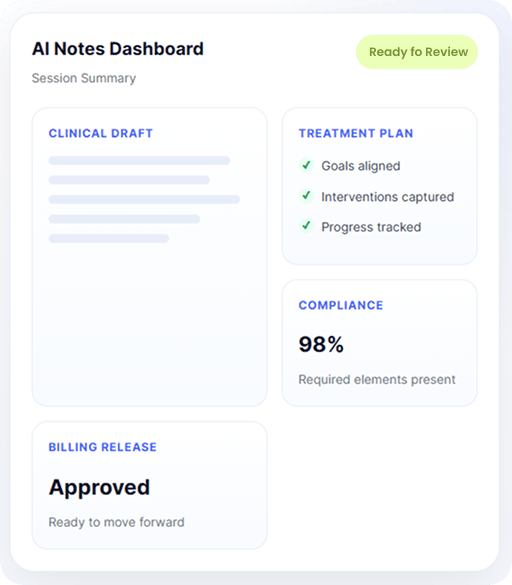

Reduce Documentation Time
Clinicians save hours each week on documentations.

Improve Note Consistency
AI-powered drafts improve quality and consistency.

Support Compliance Workflows
Build-in guidance for required documentation elements

Connect Notes to billing
Seamless integration with billing and operational workflows.
SUPPORTED DOCUMENTATION
Built Specifically for Behavioral Health
Unlike generic AI scribes, DENmaar AI Notes is designed for behavioral health workflows and
documentation requirements.
Individual Therapy
Family Therapy
Group Therapy
Substance Use Treatment
Case Management
Medication Management
Crisis Intervention
Clinical Supervision
Treatment Plans
Assessments and Reviews
AI NOTES WORKFLOW
How It Works
From captured session details to reviewed, billable documentation.

Record or Capture
Session Information
Patient check-in and
visit completed.

AI Generates a
Clinical Draft
AI Notes generate
structured documentation.

Review and Approve
Claim is created and
scrubbed for accuracy.

Release for Billing
Claim submitted to
the payer
DESIGNED FOR COMPLIANCE
Clinical Documentation with Compliance in Mind
AI Notes helps behavioral health providers document medical necessity, align treatment goals, identify
interventions, and support supervisor review workflows.
Compliance Support
Medical necessity documentation
Goal and treatment plan alignment
Intervention identification
Progress tracking
Required behavioral health documentation elements
Supervisor review workflows
Complete
Medical Necessity Documentation
Documentation supports the medical necessity of services provided and reflects the client’s ongoing treatment needs.
Evidence in Note
Aligned
Goal & Treatment Plan Alignment
Clinical documentation connects session content to active treatment goals and supports continuity across the plan of care.
Evidence in Note
- Active treatment goal referenced
- Session objectives tied to treatment plan
- Interventions support documented goals
- Progress linked back to care plan
Verified
Intervention Identification
Notes clearly identify the therapeutic interventions used during the session and how they relate to the client’s needs.
Evidence in Note
- Therapeutic intervention documented
- Intervention matched to presenting concerns
- Clinician actions clearly described
- Modality or technique identified where appropriate
Reviewed
Progress Tracking
Session documentation captures the client’s response to treatment and tracks change over time to support clinical decision-making.
Evidence in Note
- Client response to intervention documented
- Progress toward goals addressed
- Barriers or setbacks identified
- Ongoing symptoms or improvements noted
Included
Required Documentation Elements
Behavioral health notes include the core documentation elements needed for completeness, consistency, and payer readiness.
Evidence in Note
- Session date, duration, and service type included
- Relevant clinical observations documented
- Risk, safety, or notable concerns addressed when applicable
- Required note structure completed for the encounter
Available
Supervisor Review Workflow
Documentation can support internal review and approval workflows, helping supervisors monitor quality, accuracy, and compliance.
Evidence in Note
- Draft available for supervisor review
- Revisions or feedback can be incorporated
- Approval status is clearly tracked
- Final documentation is released after sign-off
MORE THAN A SCRIBE
Documentation Connected to the Rest of Your Workflow
Documentation can connect directly to scheduling, treatment plans, assessments, billing workflows, claims validation,
and provider productivity reporting.

Scheduling

Assessments

Claims Validation

DENmaar AI
Notes
Notes

Treatment Plans

Billing Workflows

Productivity Reporting
WHY ORGANIZATIONS CHOOSE DENMAAR
Built for Behavioral Health Teams and Organizations
DENmaar AI Notes is designed to support real-world clinical documentation and operational workflows.

Behavioral Health Focused
Customizable behavioral health workflows including therapy, psychiatry, substance use treatment, and multidisciplinary care models.

Scheduling & Operational Workflows
Integrated scheduling designed to support provider productivity, patient flow, authorization tracking, and claims readiness.

Supervisor Workflows
Built-in workflow logic designed to improve claim accuracy before submission through integrated operational checks and billing intelligence.

Eligibility & Insurance Verification
Integrated eligibility workflows designed to support Medicaid, commercial insurance, carve-outs, and behavioral health payer complexity.

Patient Engagement
Patient portal, intake workflows, secure communication, reminders, and measurement-based care tools.

Request an
AI Notes Trial
See how DENmaar AI Notes can help your clinicians reduce documentation time while improving
Request a demonstration or pilot program today.
Request Information
TESTIMONIALS
WHAT OUR CLIENTS SAY
On behalf of everyone at Meadowlark Counseling Services, I want to extend our sincere thanks for the continued improvements you and your team have made to the DENMaar EMR platform. We have been consistently impressed with both the functionality and user-friendly design of the system, which has made a meaningful difference in our day-to-day operations. The intuitive layout and ease of use have allowed our staff to spend less time navigating the system and more time focusing on client care. The regular updates and enhancements reflect your commitment to meeting the evolving needs of providers in the behavioral health and substance use treatment fields. We genuinely look forward to the new features introduced each month and appreciate how responsive the platform has been to the demands of clinical workflows. We have been so pleased with our experience that we’ve taken the opportunity to recommend DENMaar to other professionals in Pennsylvania who are working in the SUD field. Thank you again for your ongoing support and partnership. We are grateful to be working with a company that truly understands the needs of its users. KIndly, Becky Parks on behalf of the entire team at Meadowlark Counseling Services
I referred one of my colleagues Dr Aaron to you he is just starting g his psychology private practice and looking at where to start. I told him hands down you guys are the best billers and have a great EMR and team. He said he reached out just wanted to let you know!
FANTASTIC job keeping things rolling along with any and all of our billing concerns as well as responding to other issues which may well have been out of your wheelhouse. We are VERY grateful to have you and the crew in our corner.
I appreciate you all so much and DENmaar has been such a blessing Donna to our overall operations and success as an expanding company—allowing us to ultimately operate more efficiently, get our claims paid more consistently, ad stay on top of the critical credentialing piece, among other things. Teamwork does in fact, make the dream work. I’ll loop Chris/Isabella in on this message thread too, as I want All of your team to be aware of how much we appreciate our working relationship with DENmaar
Thank you for your diligence!! I appreciate it so much. Thank you Edwina…
Thank you so much Amy! I will be referring to DENmaar as often as I am asked about credentialing services.
Our Latest Blogs

How to Handle Claim Denials and Maximize your Reimbursements
Medical billing claim denials are one of the biggest challenges healthcare providers face today. Frequent denied claims can delay payments, reduce cash flow, and negatively impact the financial performance of healthcare practices.
Effective denial management is essential for maintaining a healthy revenue cycle and ensuring healthcare organizations receive accurate reimbursements for the services they provide.
In this guide, we’ll explain the most common causes of claim denials, strategies to reduce them, and how healthcare providers can improve reimbursement rates through efficient medical billing practices.
What Is a Claim Denial in Medical Billing
A claim denial occurs when an insurance company refuses to process or pay a submitted medical claim. Denials can happen for multiple reasons, including incorrect patient information, coding errors, eligibility issues, or missing documentation.
If not addressed quickly, claim denials can create significant financial losses for healthcare providers and disrupt revenue cycle management.
Common Reasons for Claim Denials
Missing or Incorrect Patient Information
Errors in patient demographics, insurance details, or documentation often lead to denied claims.
Eligibility Verification Issues
Claims may be denied if the patient’s insurance eligibility or coverage details are not verified before treatment.
Incorrect Medical Coding
Using inaccurate CPT, ICD 10, or HCPCS codes can result in claim rejection or payment delays.
Duplicate Claims Submission
Submitting the same claim multiple times can trigger denial from insurance providers.
Non Covered Services
Insurance companies may deny claims for services that are not included in the patient’s coverage plan.
Delayed Claim Submission
Missing payer deadlines for filing claims can lead to automatic denials.
Lack of Medical Necessity
Claims may be denied if the insurance provider believes the treatment or procedure was not medically necessary.
How to Reduce Claim Denials and Improve Reimbursements
Build a Strong Denial Management Process
Healthcare organizations should establish a dedicated denial management workflow to identify, analyze, and resolve denied claims efficiently.
A specialized team can review denials, submit appeals promptly, and identify recurring billing issues that affect reimbursements.
Identify the Root Cause of Denials
Tracking and categorizing claim denials helps practices understand recurring issues and improve billing accuracy.
Common denial categories may include:
- Coding errors
- Missing documentation
- Eligibility issues
- Authorization problems
- Timely filing errors
By identifying patterns, healthcare providers can improve internal billing processes and reduce future denials.
Verify Insurance Eligibility Before Service
Eligibility verification is one of the most effective ways to reduce claim denials. Providers should confirm insurance coverage, co-pays, deductibles, and authorization requirements before patient appointments.
Submit Appeals Quickly
Denied claims should be reviewed and appealed immediately. Delays in resubmission can result in permanent claim rejection and lost revenue.
A fast response improves the chances of successful reimbursement recovery.
Monitor Revenue Cycle Performance
Healthcare providers should regularly analyze denial trends, reimbursement rates, and billing efficiency through financial reporting and revenue cycle monitoring.
Visual reports and dashboards help identify weaknesses in the billing process and support data driven improvements.
Benefits of Outsourcing Medical Billing Services
Outsourcing medical billing and denial management can significantly reduce administrative burden for healthcare organizations.
Professional billing partners help practices by:
- Improving claim accuracy
- Reducing denial rates
- Managing appeals and follow ups
- Ensuring compliance with payer requirements
- Optimizing revenue cycle management
This allows healthcare providers to focus more on patient care while improving financial performance.
Best Practices for Preventing Claim Denials
Healthcare providers can reduce denials by implementing these best practices:
- Verify patient insurance before appointments
- Submit claims accurately and on time
- Train staff on medical coding updates
- Maintain complete patient documentation
- Monitor billing performance regularly
- Use modern EHR and medical billing systems
- Stay updated on payer policy changes
Conclusion
Claim denials can create major financial challenges for healthcare organizations, but proactive denial management strategies can significantly improve reimbursement outcomes.
By verifying patient eligibility, improving coding accuracy, monitoring billing performance, and using reliable healthcare technology solutions, providers can reduce denied claims and strengthen their revenue cycle management process.
Partnering with experienced medical billing professionals can further simplify denial management and help practices maximize reimbursements efficiently.
Frequently Asked Questions
What causes medical claim denials?
Medical claim denials are commonly caused by coding errors, missing documentation, incorrect patient information, eligibility issues, and delayed claim submissions.
How can healthcare providers reduce claim denials?
Providers can reduce denials by verifying insurance eligibility, improving coding accuracy, submitting claims on time, and monitoring denial trends regularly.
What is denial management in healthcare?
Denial management is the process of identifying, analyzing, correcting, and appealing denied insurance claims to recover reimbursements.
Why is eligibility verification important in medical billing?
Eligibility verification confirms insurance coverage before treatment, reducing the risk of denied claims and payment delays.
Can outsourcing medical billing improve reimbursements?
Yes, outsourcing medical billing services can improve claim accuracy, reduce denials, speed up reimbursements, and optimize revenue cycle management.

How to Expand Private Practice with Telemedicine
Telemedicine has transformed the healthcare industry by making medical and behavioral health services more accessible, efficient, and convenient. During the COVID 19 pandemic, virtual healthcare became essential for millions of patients who needed safe access to medical care while maintaining social distancing protocols.
Today, telemedicine continues to play a major role in modern healthcare delivery. From mental health counseling to remote patient monitoring, private practices can significantly improve patient engagement, expand their reach, and increase operational efficiency by adopting secure telehealth solutions.
What Is Telemedicine
Telemedicine allows healthcare providers to deliver medical and behavioral health services remotely using secure video conferencing, phone calls, and digital communication platforms.
It enables patients to connect with doctors, therapists, psychiatrists, and healthcare professionals without visiting a physical clinic.
According to industry reports, virtual healthcare adoption has continued to grow rapidly, making telemedicine a valuable long term investment for private practices.
Benefits of Telemedicine for Private Practices
Increased Patient Convenience
Patients can attend appointments from their homes without spending time traveling or waiting in crowded clinics. This improves appointment attendance and patient satisfaction.
Expanded Access to Healthcare
Telemedicine allows providers to reach patients in rural and underserved communities where access to healthcare services may be limited.
Improved Behavioral Health Access
Virtual care has significantly improved access to mental health and behavioral health services, especially for patients who prefer remote therapy sessions.
Reduced Operational Costs
Telemedicine can reduce administrative overhead, optimize scheduling, and improve workflow efficiency for healthcare providers.
Better Patient Monitoring
Remote monitoring tools help providers track patient progress and maintain consistent communication between visits.
Faster Appointment Scheduling
Virtual consultations offer more flexible scheduling options, helping practices accommodate more patients efficiently.
How Private Practices Can Successfully Adopt Telemedicine
Ensure HIPAA Compliance
Security and patient privacy should be the top priority when implementing telemedicine services. Healthcare providers must use HIPAA compliant telehealth platforms that protect patient data and ensure secure communication.
Free video conferencing tools may not provide the necessary healthcare compliance standards required for medical practices.
Explore secure and HIPAA compliant telehealth solutions for modern healthcare practices.
Partner With an Experienced Telehealth Provider
Most private practices do not have the in house resources needed to develop a secure telemedicine platform. Partnering with an experienced healthcare technology provider can simplify implementation and improve efficiency.
Learn how our behavioral health technology solutions support healthcare providers and virtual care delivery
Test the Platform Before Launch
Before offering virtual care services to patients, practices should thoroughly test the telemedicine platform to identify technical issues, improve usability, and ensure smooth communication between providers and patients.
Testing helps practices deliver a better patient experience and avoid disruptions during virtual appointments.
Why Telemedicine Is Essential for Behavioral Health Practices
Behavioral health providers have seen significant improvements in patient accessibility through telemedicine. Virtual therapy and psychiatric consultations make it easier for patients to receive care consistently, especially those dealing with anxiety, depression, or transportation challenges.
Telehealth also supports continuity of care by enabling regular follow up appointments and flexible scheduling.
How DENmaar Supports Telemedicine Growth
DENmaar provides secure and efficient telehealth solutions designed specifically for healthcare and behavioral health providers. Our platform simplifies virtual care delivery while ensuring compliance, security, and ease of use.
The system enables providers to conduct teletherapy sessions, manage patient communication, and streamline healthcare operations through an integrated digital platform.
Frequently Asked Questions
What is telemedicine in healthcare?
Telemedicine is the delivery of healthcare services remotely through secure video calls, phone consultations, and digital communication platforms.
How does telemedicine help private practices?
Telemedicine helps private practices improve patient access, reduce operational costs, increase appointment flexibility, and enhance patient engagement.
Is telemedicine secure for patient care?
Yes, HIPAA compliant telemedicine platforms are designed to protect patient privacy and ensure secure communication between providers and patients.
Why is telemedicine important for behavioral health?
Telemedicine improves access to therapy and psychiatric services, allowing patients to receive consistent care remotely and conveniently.
Can telemedicine improve patient satisfaction?
Yes, virtual healthcare appointments reduce travel time, eliminate long wait times, and provide more convenient scheduling options for patients.
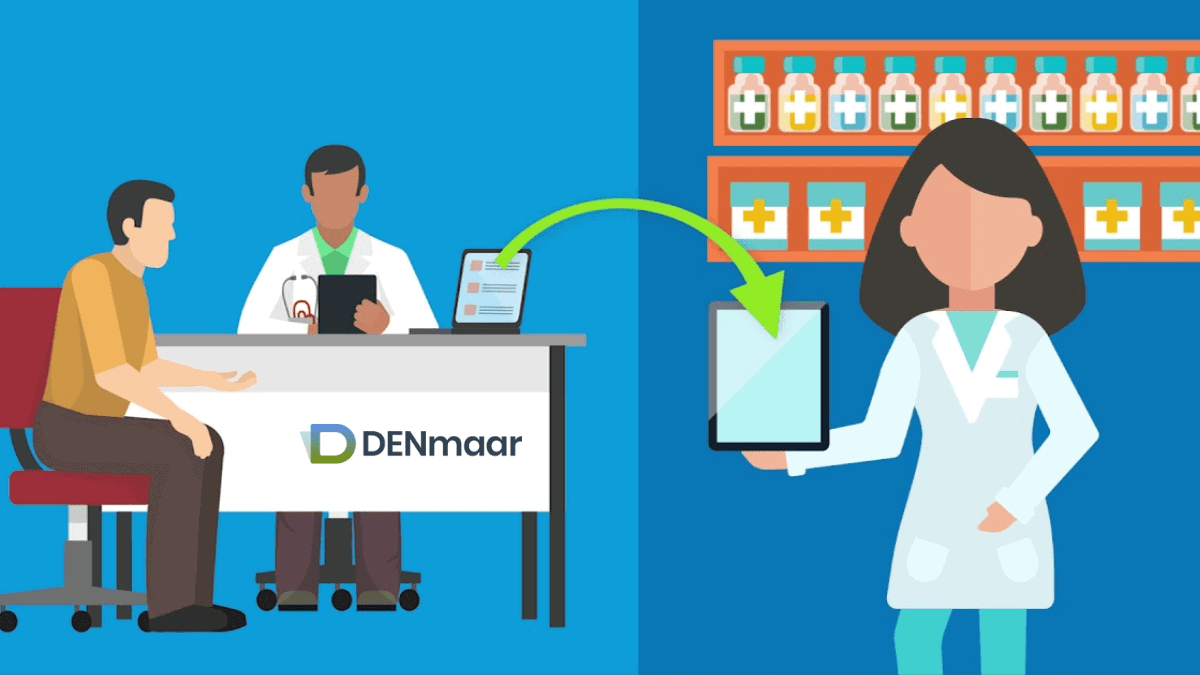
Why Is E-Prescribing Essential For Providers & Patients
The introduction of e-prescription in 2003 made it a more convenient, cheaper, and safer alternative to prescription for doctors, pharmacies, and patients.
Through electronic prescribing, or ‘e-prescribing,’ healthcare providers can enter prescription information into a computer – such as a tablet, laptop, or desktop computer – and use special software to transmit prescriptions to pharmacies and connect to transport networks securely.
The adoption of standards to facilitate the electronic prescribing process is a crucial government component in accelerating the adoption of electronic health records and building national health information technology infrastructure.
In short, the goal of increasing e-Prescribing is to improve workflow, increase patient safety, and increase transparency in future drug pricing.
What is e-prescribing?
Electronic prescribing is a process that healthcare providers use to send prescriptions to a patient’s preferred pharmacy.
There are several benefits to e-prescription software (Rcopia), including simplifying obtaining a pharmacy prescription, dispensing medication, and getting a new refill.
Medical software plays a vital role in the adoption and use of electronic prescriptions, as these solutions contain the necessary tools.
Imagine the challenge for a pediatrician looking at a new patient and deciding what medications they can take, exceptionally if the patient’s parents did not prescribe them ahead of time. In such cases, determining what medications the young patient is taking or what may be allergic to them becomes more complex and dangerous.
Electronic prescriptions are just one condition that describes the immediate benefits of electronic medical records (EMR) software. However, these tools are essential features of the best medical software, offering healthcare providers a detailed look at a patient’s medication history, even if they’ve never seen one before.
In 2019, doctors used e-prescription for controlled and non-controlled substances online at a higher rate than in the previous two years. In addition, online prescriptions for uncontrolled substances increased from 76 percent in 2017 to 86 percent in 2019.
While the COVID-19 epidemic affects patients and providers worldwide, a reliable national health information network has never been more critical.
EPCS Technology
Many states enacted electronic prescription requirements, meaning that more prescriptions were written electronically, which helped protect patients’ prescriptions from fraud and abuse. Since 2017, the number of electronic prescriptions written has increased.
Furthermore, the introduction and use of Electronic Prescription for Controlled Substances (EPCS) technology aim to help providers integrate prescription information into EHR (electronic health records), which can increase patient safety and help prevent diversion and fraud. ECPS technology can also facilitate doctors’ workflow and reduce the burden on the patient.
Electronic prescription software options
Some popular software choices for 2022 offer e-prescribing for healthcare organizations without an EMR system.
Other high-performance companies offer electronically prescribed programs that act as standalone applications or integrate with existing EHR platforms. These tools usually make finding prescription drugs easier, checking patient drug records, and obtaining real-time prescriptions. Most potential adverse reactions and drug tests against known patient allergies are also indicated.
Best E-Prescription Software
With DENmaar, you would be able to access all the medication information regarding your patient at a button. The medications prescribed in Rcopia (e-prescription software) are pulled into our EHR, and we provide a very intuitive and easy-to-use access to the medication information. The data is extracted in real-time from the Rcopia portal and made available to provide a seamless experience.
Why is e-prescription essential?
Prevent clerical errors
According to a Food and Drug Administration study, there have been 95,000 prescription errors since 2000. One of the major causes of this problem is that many drugs are similar or have similar spellings. Electronic prescriptions help to illustrate this by showing drug options side by side and allowing providers to customize the prescription of their choice.
Complete the patient’s medical records
The second most important advantage of e-prescription is its data management capabilities. By keeping medical records, other healthcare providers can determine what prescription medications the patient is taking and when their prescription was last filled. In addition, electronic prescriptions can redefine compliance by making it easier for states to track prescriptions in multiple pharmacies and allowing states to integrate them into prescription drug monitoring programs (PDMPs).
Healthcare provider recommendation tools
Electronic prescribing provides instant information on allergies, drug interactions, and duplicate treatments, providing health professionals with the data and professional intelligence needed to ensure patients receive the proper medication. Electronic prescriptions also include system alerts that notify healthcare professionals about potential drug interactions and repeat treatments.
A significant additional benefit of e-prescription is time-saving for pharmacy staff who calls to check orders. Moreover, carefully written prescriptions save time for pharmacy staff and doctors.
E-prescription capabilities allow physicians and healthcare professionals to meet all the challenges and make it easier to determine which medications the new patient is taking – even if they do not remember them before the visit.
Our Partners






Ready to get started?
Feel free to reach out if you have any questions.
