

We don’t just submit claims. We create visibility and accountability around every unpaid claim—so management knows what’s being worked, what’s stuck, and why.
Know What’s Happening With Every Unpaid Claim
Behavioral health billing with complete visibility and accountability

98.1%
Clean Claim Rate
1.47%
Rejection Rate
0.32%
Denial Rate
5–10%
Denial Rate
10–20%
Average Revenue
Improvement
$0
EHR Software Fee
With Billing Services
With Billing Services
CLAIMS VISIBILITY
Your Claims May Be Getting
Submitted. But Are They Getting Paid?
Submitting a claim is only the beginning.
Your Claims May Be Getting
Submitted. But Are They Getting Paid?
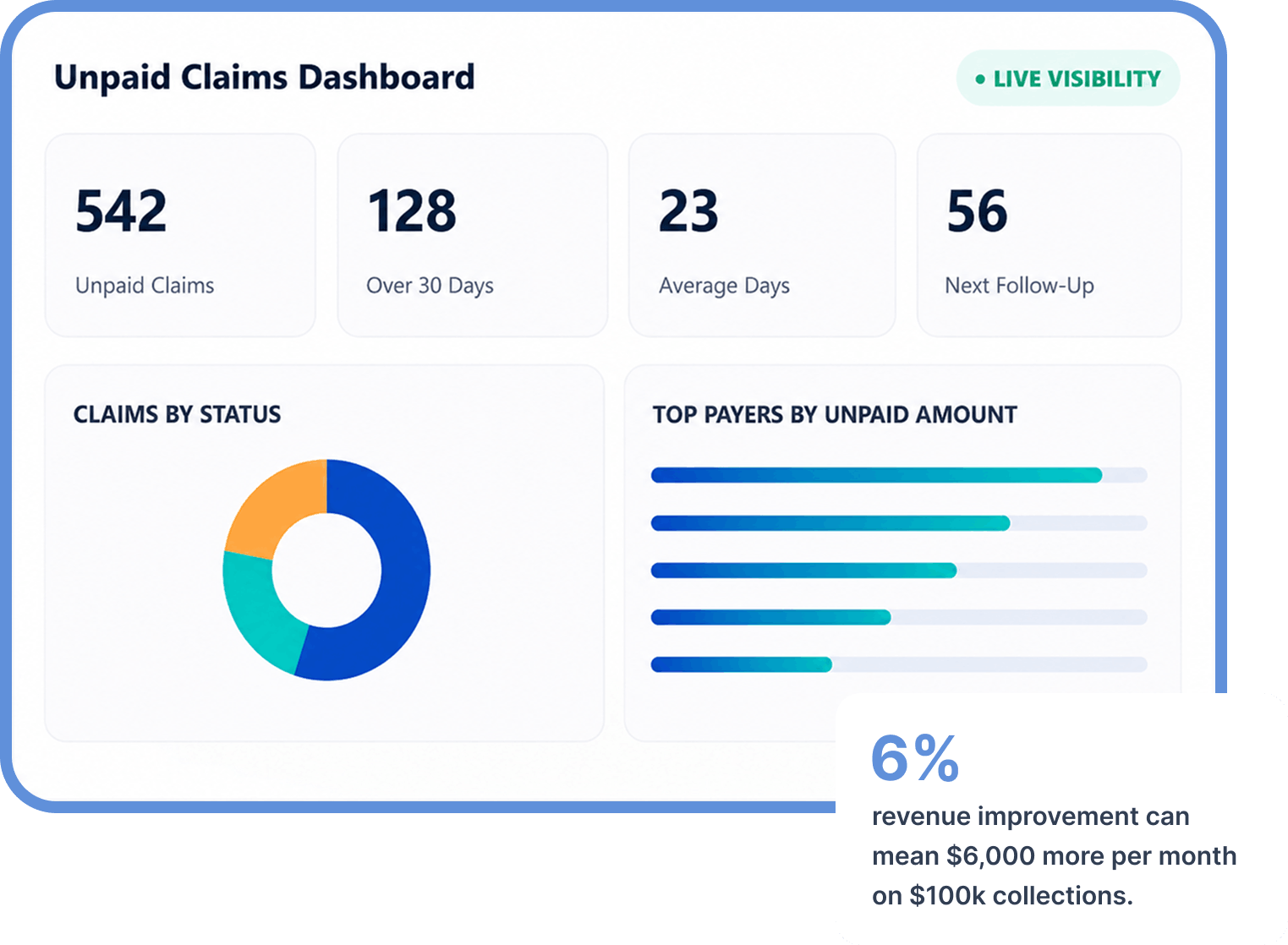
Revenue is lost when rejected claims aren’t corrected, denials aren’t resolved, authorizations expire, payer requests go unanswered, and unpaid claims disappear into spreadsheets and work queues.
DENmaar gives behavioral health practices a clear view of:
- Which claims remain unpaid
- Why each claim is stuck
- What action has been taken
- Who is responsible for the next step
- When follow-up is due
- What the payer said during the last follow-up
- Which payers and problems are creating the most lost revenue
You no longer have to accept, “We’re working on it.”
You can see exactly what is being worked, what happened and what comes next.
The Improvement in Claims Can Pay for DENmaar
any practices are already losing more money through preventable claim problems than they would spend fixing them.
For a practice collecting $100,000 per month
6% = +$6,000 / month
in realized insurance revenue
That improvement alone could offset the cost of DENmaar’s billing services.
- Behavioral health EHR software at no additional cost
- Claims Copilot
- Eligibility and insurance workflows
- Payment posting
- Rejection and denial management
- Aging-claim follow-up
- Reporting and management visibility
- Support from DENmaar’s Insurance Knowledge Team
Claim Lifecycle
Every Claim Has an Owner, a Status
and a Next Action
DENmaar creates a structured process for managing the entire claim lifecycle—from appointment readiness
through final payment.
01
Prevent Problems Before Submission
Eligibility, payer, authorization, credentialing and documentation issues are identified before they become rejected or denied claims.
02
Submit Clean Claims
Claims are reviewed for common errors and payer requirements before submission.
03
Monitor the Payer Lifecycle
Claims are tracked after submission so unresolved claims don’t quietly disappear into aging.
04
Assign the Next Action
Every problem claim has a clear status, responsible team member and required next step.
05
Document Every Follow-Up
Management can see when follow-up occurred, what the payer said and what must happen next.
06
Escalate Unresolved Claims
Claims receive additional attention before filing limits or appeal deadlines are missed.
07
Measure Performance
Monitor clean claims, rejections, denials and aging by payer, provider, location, service and responsible team member.
Management Visibility
Your Billing Operation Shouldn’t Be a
Black Box
Monthly reports tell you what has already happened. DENmaar provides visibility into
what is happening now.
Visibility creates accountability.
A practice should not have to wait until collections fall to discover that claims aren’t being worked effectively.
- Whether claims are being worked consistently
- Whether follow-up is producing results
- Why claims remain unpaid
- Whether the same errors keep recurring
- Where responsibility for the next action sits
- Which workflows or team members need support
- Which payers are causing the most problems
- How much revenue remains at risk
Visibility creates accountability.
Accountability creates action.
Action moves claims toward payment.
Improve the Team You Have—or Let DENmaar Manage the Process
Some practices already have an internal billing team but lack the technology, payer knowledge and management visibility required to oversee it. Others want an experienced partner to manage the entire revenue cycle.
OPTION 01
Claims Copilot for Your Existing Team
Give your billing staff the structured workflows, claim intelligence and accountability tools needed to manage unpaid claims more effectively. Management gains visibility without immediately replacing the internal team.
OPTION 02
Full Revenue Cycle Management
Let DENmaar manage claim creation and submission, rejection correction, payment posting, denial resolution, insurance follow-up, aging claims, payer escalation, patient balances and revenue-cycle reporting.
Either way, management gains control over the revenue cycle.
Behavioral Health Expertise
Built Specifically for Behavioral Health
Behavioral health billing requires more than generic claim submission.
Mental health therapy
Psychiatry and medication management
Substance-use treatment
Intensive outpatient and partial hospitalization programs
Community behavioral health
Multidisciplinary practices
Telehealth billing
Time and unit requirements
Rejections and denials
Built Specifically for Behavioral Health
- Behavioral health payer carve-outs
- Eligibility and benefit verification
- Prior authorizations
- Provider credentialing
- Therapy and psychiatric coding
- Same-day services
- Telehealth billing
- Missing or incomplete documentation
- Coordination of benefits
- Rejections and denials
- Aging insurance balances
Before Billing Begins
Problems Are Often Created Before Billing Begins
Many claim problems originate before the claim reaches the billing team.
An appointment may be scheduled with the wrong payer. Eligibility may not be verified. An authorization may be missing. Documentation may not support the code or units billed. A provider may not be enrolled correctly.
DENmaar connects scheduling, eligibility, authorizations, documentation and billing in one operational system.
This helps prevent bad claims—not merely work them after they fail.
Prevent the problem upstream.
01
Scheduling
Right payer • right workflow
02
Eligibility & Authorization
Verify before service
03
Documentation
Support code and units
03
Billing
Submit cleaner claims
More Than Billing
Technology, Insurance Expertise and
Human Follow-Through
Most billing companies provide reports. Most software companies provide tools. DENmaar combines:
Technology, Insurance Expertise and
Human Follow-Through
You get a system designed to improve the financial performance of your behavioral health practice.
Enterprise capability with small-practice simplicity.
- Behavioral health EHR technology
- Claims Copilot
- Revenue-cycle services
- Insurance knowledge
- Human payer follow-up
- Management visibility
- Operational accountability
Billing Review
See What Better Claims Performance Could Mean for Your Practice
If too many claims are rejected, denied, aging or simply unexplained, let’s look at the process together.
Current monthly insurance revenue
Baseline performance
Clean-claim rate
Rejection and denial rates
Claims over 30 days
Value of unpaid and aging claims
Follow-up process
Where accountability is breaking down
Let’s Determine Whether There Is Operational Alignment
We begin with a discussion focused on:
- Organizational structure
- Insurance workflows
- Operational goals
- Implementation fit
Request Information
Capterra, Software Advice And Get App 2023 / 25
Best Of Badges Awarded To DENmaar
2023 / 25 “Best of” badge winners = DENmaar Neuro has earned a well-deserved Best Value Badge.
See our reviews for our software being recognized as an impactful solution for your business.





Our Latest Blogs

Get Ahead of the Competition: Level Up with Expert Insurance Credentialing Services
With insurance credentialing services, you can navigate the complex world of insurance credentialing, streamline the process, and ensure you get the coverage you need. Choosing the exemplary service is essential, and we’re here to help. Let us explore the advantages of outsourcing your insurance credentialing and the common challenges you may face. Don’t let the paperwork overwhelm you – let us guide you towards a smoother credentialing experience.
If you’re considering joining insurance networks, it’s crucial to understand the process of insurance credentialing. Insurance credentialing is the process of verifying and assessing the qualifications, experience, and credentials of healthcare providers to ensure they meet the standards set by insurance companies. This process is of utmost importance as it allows healthcare providers to become in-network with insurance companies, enabling them to receive reimbursement for their services. The steps involved in insurance credentialing include completing applications, submitting required documents, and undergoing a thorough evaluation by the insurance company. Errors in the application process can lead to delays or denials in credentialing, so avoiding common mistakes such as incomplete documentation or inaccuracies is essential. Many healthcare providers outsource their insurance credentialing to specialized companies to streamline this process. Outsourcing insurance credentialing can save time and resources, permitting healthcare providers to concentrate on patient care while ensuring a smooth reimbursement process.
What are Insurance Credentialing Services?
Insurance credentialing services refer to the process of verifying and validating the credentials of healthcare providers. These services play a crucial role in the healthcare industry by ensuring that providers meet the requirements to participate in insurance networks.
Definition of insurance credentialing
You must understand insurance credentialing services’ fundamental concept and purpose. Insurance credentialing refers to evaluating the qualifications and credentials of healthcare providers to ensure their eligibility to participate in insurance networks. It’s an essential step for healthcare providers to establish relationships with insurance companies and receive reimbursement for their services.
Here are three key aspects of insurance credentialing:
- Insurance credentialing benefits
Credentialing allows healthcare providers to expand their patient base by accepting insurance plans. It also ensures that providers meet quality standards and comply with regulatory requirements. - Selecting insurance credentialing
Providers must choose the insurance networks they want to join based on patient population, reimbursement rates, and administrative requirements. - Outsourcing insurance credentialing
Many healthcare providers outsource the credentialing process to specialized companies. It can save time and resources, as experts handle the complex paperwork and follow up with insurance companies.
Role of insurance credentialing services in the healthcare industry
As a healthcare provider, you can depend on insurance credentialing services to streamline verifying and evaluating your qualifications and credentials for participation in insurance networks. Insurance credentialing can be complex and time-consuming, requiring you to submit various documents and undergo extensive background checks. You can save valuable time by outsourcing credentialing services to a specialized company. Insurance credentialing services offer numerous benefits to healthcare providers. They have expertise in navigating the credentialing process and can ensure that all necessary paperwork is completed accurately and efficiently. Additionally, they can help you select the most suitable insurance credentialing service based on your specific needs and requirements.
Benefits of using Insurance Credentialing Services for healthcare providers
You can frequently benefit from using insurance credentialing services as a healthcare provider. These services streamline provider enrollment, ensuring you can join insurance networks and expand your patient base. The credentialing process is handled by experts who navigate the complex requirements and paperwork on your behalf, saving you time and effort. By completing credentialing, you can get into insurance contracts, which provide financial security and stability for your practice. Insurance credentialing services also play a crucial role in ensuring timely and accurate provider reimbursement, reducing the administrative burden, and improving your cash flow.
How to Choose the Right Insurance Credentialing Service
When choosing an insurance credentialing service, there are several factors to consider.
Factors to consider when selecting an insurance credentialing service
- First, you should look at their expertise in the industry to ensure they have the necessary knowledge to handle your credentialing needs.
- Additionally, it’s essential to consider their reputation and client reviews to understand their track record and customer satisfaction.
- Lastly, you should evaluate the services they offer, their pricing structure, and the turnaround time for the credentialing process.
Expertise
Here are three key factors to consider:
- Years of experience
Look for a credentialing service provider with extensive experience in the insurance industry. Their knowledge and understanding of the credentialing process will ensure an efficient process for your practice. - Specialized expertise
Determine if the company has expertise in your specific area of healthcare. It will ensure they have the necessary knowledge and understanding of the unique challenges and obstacles that may arise during the credentialing process. - Reputation and client satisfaction
Research the company’s reputation and satisfaction rate. Check for testimonials and reviews from other healthcare providers to gauge their professionalism and customer service. A reputable company with high client satisfaction will deliver the benefits you seek in an insurance credentialing service.
Reputation and client reviews
Consider the reputation and client reviews of insurance credentialing services to decide on selecting the right provider for your practice. Reputation management is crucial in healthcare, and client satisfaction is an essential factor to consider. Look for online reviews, provider feedback, and customer testimonials to gauge the quality of service the credentialing service provides. Now, let’s move on to discussing the services offered and pricing.
Services offered and pricing
You should evaluate the services and pricing to choose the right insurance credentialing service. Here are some factors to consider:
- Pricing transparency
Look for a service outlining fees and additional costs in the credentialing process. - Insurance network participation
Ensure the service provider has experience working with the insurance networks you want to participate in.
- Provider enrollment
Check if the service provider assists with the enrollment process and provides ongoing support.
These factors will help you find an insurance credentialing service that meets your needs and budget.
Turnaround time for the credentialing process
Evaluate the turnaround time for the credentialing process when selecting an insurance credentialing service. Reducing wait times is crucial in today’s fast-paced healthcare industry. Look for a service that improves efficiency and optimizes workflow to ensure a smooth and timely credentialing process. A reliable service should also have a track record of enhancing provider enrollment and streamlining documentation. Considering these factors, you can minimize delays and ensure a seamless credentialing experience.
Questions to ask insurance credentialing service providers
When choosing an insurance credentialing service, it’s important to ask potential providers a few key questions.
- Firstly, inquire about their industry experience and how long they’ve been in the business.
- Additionally, ask for references from satisfied clients to ensure their credibility.
- It’s also crucial to discuss their fees, what services are included, and the typical timeframe for the credentialing process.
These questions will help you decide and find the right insurance credentialing service for your needs.
How long have you been in the industry?
Consider the experience of insurance credentialing service providers when selecting the right one for your needs. When evaluating providers, ask them how long they’ve been in the industry. It will give you an idea of their experience duration and industry expertise. Look for providers with extensive industry knowledge and a track record of client satisfaction. Additionally, consider their cost efficiency in delivering their services.
Can you provide references from satisfied clients?
To assess the credibility of potential insurance credentialing service providers, ask them for references from satisfied clients. Client references and customer testimonials can provide valuable insights into the quality of their services. Requesting references allows you to hear directly from clients who’ve worked with the provider, giving you an idea of their level of satisfaction and the provider’s track record. Client feedback is essential in making an informed decision when choosing an insurance credentialing service.
What are your fees, and what services are included?
To determine the right insurance credentialing service for you, ask providers about their fees and the services they include in their packages. Here are three key points to consider:
- Insurance Credentialing Process
Ask the provider to outline their step-by-step process for credentialing. It will help you understand the level of detail and efficiency they bring.
- Importance of Insurance Credentialing
Inquire about their understanding of the importance of credentialing in ensuring compliance and reimbursement for healthcare providers. - Credentialing Service Fees
Request a breakdown of their fees, including any upfront costs, recurring fees, and additional charges for specific services. It will help you evaluate the affordability and value of their services.
Outsourcing this service can bring numerous benefits, including time and cost savings, allowing you to focus on providing quality healthcare services.
How long does the credentialing process typically take?
As you continue evaluating insurance credentialing service providers, it’s essential to inquire about the typical duration of the credentialing process. The average duration can vary depending on various factors affecting the timeline, such as the complexity of your application and the responsiveness of insurance companies. Some providers may offer expedited credentialing options for a faster process. However, delays in the credentialing process can occur due to missing or incomplete documentation. Discussing strategies for speeding up credentialing with service providers is crucial.
Benefits of Outsourcing Insurance Credentialing Services
By outsourcing, you can save time and reduce costs associated with the credentialing process. Additionally, outsourcing can minimize errors and avoid delays in the credentialing process, ensuring that you can start providing services to patients more quickly. Moreover, outsourcing gives you access to industry knowledge and expertise, allowing you to streamline the credentialing process and focus on delivering high-quality care.
Time and cost savings for healthcare providers
Save time and money by outsourcing your insurance credentialing services. By utilizing insurance credentialing services, healthcare providers can benefit from the following:
- Cost-effectiveness
Outsourcing insurance credentialing saves providers money by avoiding the need for additional staff and resources dedicated to the credentialing process. It frees up financial resources for other vital areas of the practice. - Time efficiency
Insurance credentialing can be time-consuming, requiring attention to detail and adherence to credentialing requirements. Outsourcing this task allows healthcare providers to concentrate on patient care, saving valuable time. - Insurance network participation
Working with a credentialing service ensures that healthcare providers are enrolled in the necessary insurance networks. It increases their patient base and expands their reach within the healthcare industry.
Minimizing errors and avoiding credentialing delays
By utilizing insurance credentialing services, you can minimize errors and avoid credentialing delays, ensuring a smooth and efficient process for your healthcare practice. Outsourcing this task to experts who are well-versed in insurance network participation and documentation requirements can significantly minimize the chances of errors occurring during the credentialing process. These professionals are trained to handle complex paperwork and navigate the intricacies of insurance contract negotiation, ensuring that all necessary documents are accurately completed and submitted on time. Additionally, they can expedite the credentialing process by promptly following up with insurance companies and providing any additional information required.
Access to industry knowledge and expertise
When outsourcing insurance credentialing services, you gain access to industry knowledge and expertise that can streamline the process and ensure optimal results for your healthcare practice. Here are three benefits of accessing industry expertise through outsourcing:
- In-depth understanding of credentialing requirements
Professional credentialing services have extensive knowledge of insurance companies and regulatory bodies’ complex and ever-changing regulations. This expertise allows them to navigate the credentialing process more efficiently, minimizing errors and avoiding delays. - Efficient and accurate application submission
Insurance credentialing services are well-versed in the intricacies of the application process. They know what information is required, how it should be presented, and which supporting documents are necessary. It ensures that your application is complete, accurate, and submitted promptly.
- Ongoing support and guidance
By choosing a reputable credentialing service, you can access ongoing support and guidance throughout the credentialing process. It can provide valuable advice and assistance in maintaining up-to-date credentials, resolving issues or discrepancies, and staying compliant with industry regulations.
Outsourcing insurance credentialing services saves you time and effort and provides access to industry expertise that can enhance the efficiency of your credentialing process.
Streamlining the credentialing process
Outsourcing insurance credentialing services can streamline the credentialing process by providing efficient and expert assistance. By utilizing the services of a specialized credentialing company, you can experience a significant improvement in streamlining efficiency. These companies have the resources and expertise to handle the complex credentialing paperwork, simplifying your process. It helps reduce the administrative burden on your organization, allowing you to focus on other essential tasks. Moreover, outsourcing ensures accuracy in the credentialing process, as these companies thoroughly understand the requirements and regulations.
Common Challenges in Insurance Credentialing
Many providers face common challenges during credentialing, such as lengthy application processes, complex paperwork, and frequent changes in insurance requirements. However, insurance credentialing services can help alleviate these obstacles by providing expertise and guidance. Additionally, by following some tips and best practices, healthcare providers can navigate the credentialing process more effectively and ensure a smoother experience.
Overview of common obstacles faced during the credentialing process
During the credentialing process, you may encounter several common obstacles due to the complexity of insurance requirements. To help you navigate through these challenges, here is an overview of the most common pitfalls and practical solutions:
- Credentialing delays
Delays in the credentialing process can occur due to missing or incomplete documentation, outdated forms, or errors in the application. To avoid these delays, thoroughly review and submit all required documents, double-check the accuracy of your application, and stay proactive in following up with the insurance companies. - Provider preparation
Insufficient preparation can lead to rejections or credential delays. Before starting the process, gather all necessary information, such as education, training, and licenses. Additionally, staying organized is essential; keeping track of all required forms and deadlines can streamline the process. - Proven strategies and practical solutions
Engaging the services of a professional credentialing company can be a valuable strategy to overcome common obstacles. These companies have expertise in navigating complex insurance requirements, ensuring accurate and timely submissions, and providing ongoing support throughout credentialing.
How insurance credentialing services can help overcome these challenges
To overcome the common challenges in insurance credentialing, you can benefit from the assistance of insurance credentialing services. These services are designed to streamline processes and improve the efficiency of credentialing. By employing these services, you can overcome provider enrollment challenges and enhance your provider networks. Insurance credentialing services have the expertise and resources to navigate the complex credentialing process, ensuring that all documents are completed accurately and submitted promptly. Additionally, these services can help you improve reimbursement rates by ensuring that all necessary information is provided to insurance companies. With their assistance, you can increase your chances of getting approved as a provider and receiving reimbursements more quickly.
Tips for healthcare providers to navigate the credentialing process more effectively
You can navigate the credentialing process more effectively by following these tips:
- Efficient credentialing
Streamline the process by gathering all necessary documents and information ahead of time. It includes your education, training, licensure, certifications, and references. - Navigating insurance contracts
Familiarize yourself with the terms and conditions of the insurance contracts you’re applying for. Understand the reimbursement rates, billing guidelines, and specific requirements or restrictions. - Ensuring accurate documentation
Pay attention to detail when completing credentialing applications. Provide accurate information and double-check your submissions to avoid delays or rejections.
Understanding and meeting the credentialing requirements can expedite the process and reduce the chances of errors or omissions. Building strong provider networks can also help, as recommendations from other established providers strengthen your application.
We’ve discussed the importance of insurance credentialing for healthcare providers. By going through the credentialing process, providers can gain access to a broader network of patients and increase their revenue potential. Insurance credentialing also significantly impacts patient satisfaction, ensuring that providers meet specific standards of quality and competence. Insurance credentialing services are expected to play an essential role in the healthcare industry as the demand for high-quality healthcare grows. The benefits of utilizing insurance credentialing services far outweigh the challenges, making it a valuable investment for healthcare providers. While some may argue that it’s more cost-effective to handle credentialing in-house, the reality is that outsourcing allows for greater efficiency and expertise. By partnering with our reputable insurance credentialing service, healthcare providers can concentrate on delivering quality patient care while leaving the complex and time-consuming credentialing task to the professionals. It ultimately leads to smoother operations, increased revenue, and reduced administrative burden.
At DENmaar, our Insurance Credentialing Services can help healthcare providers solve their credentialing challenges by streamlining the process, ensuring accuracy, and saving valuable time and resources. We provide automated PAR status updates and expiring document alerts. We help you create and update CAQH. To know more about how our services can benefit your practice, Contact us now at 844-727-3627 for a consultation.

The Complete Guide to Insurance Credentialing for Therapists
Insurance credentialing offers numerous benefits for therapists, including increased client base and financial stability. However, the process can be complex and time-consuming. It’s essential to follow specific steps that ensure a successful credentialing process. These include gathering all necessary documents, completing applications accurately, and submitting them promptly. Common challenges in insurance credentialing include navigating insurance company requirements and dealing with delays or denials. Consider using a credentialing service such as DENmaar to ease the burden. When choosing a service, consider their experience, reputation, and cost. Staying updated with insurance credentialing requirements is crucial to maintaining a smooth and successful practice. Let us explore a complete guide to insurance credentialing for therapists.
What is Insurance Credentialing?
Insurance credentialing is the process of obtaining approval from insurance companies to provide services and receive reimbursement. It involves submitting necessary documentation, such as licenses, certifications, and malpractice insurance, to prove qualifications and eligibility. Insurance credentialing for therapists plays a crucial role in the healthcare and therapy industry, as it allows therapists to expand their client base and ensures that patients can access affordable and quality care through their insurance plans. To become a credentialed therapist, you must go through the process of applying to and being approved by insurance companies. Insurance credentialing is the process by which therapists gain approval from insurance companies to provide covered services to their clients. Here is what you need to know about insurance credentialing:
- Importance of credentialing: Credentialing is crucial as it allows therapists to accept insurance and expand their client base.
- Credentialing requirements: Insurance companies have specific requirements that therapists must meet, such as having a valid license, malpractice insurance, and appropriate education and experience.
- Credentialing process timeline: The credentialing process can take several months, with each insurance company having its own timeline for reviewing applications.
- Common credentialing challenges: Delays, paperwork, and meeting the various requirements can be challenging for therapists during the credentialing process.
- Credentialing for different therapy specialties: Each specialty may have specific requirements and considerations for insurance credentialing.
Click here to get started with Credentialing
Role of Insurance Credentialing in the Healthcare and Therapy Industry
Insurance credentialing is essential for therapists because it allows them to establish contracts with insurance companies, provide services, and receive payment from those insurance plans. This process significantly impacts therapy practices, expanding the therapist’s client base and increasing their revenue potential. However, therapists often face challenges during credentialing, such as completing extensive paperwork, meeting specific requirements, and dealing with lengthy approval times. Furthermore, insurance credentialing can also affect therapist-patient relationships, as it may limit the number of sessions covered by insurance or require patients to pay out-of-pocket. The future of insurance credentialing in the therapy industry is uncertain, as it may continue to evolve and adapt to changing healthcare regulations and policies.
Why is Insurance credentialing for therapists essential?
Insurance credentialing is essential for therapists because it ensures timely payments from insurance companies, boosting your practice’s performance and credibility. By becoming credentialed, you can expand your patient reach by being part of insurance carriers’ networks, allowing you to serve a broader population and increase your client base. This process is crucial for therapists looking to establish a successful and sustainable practice.
Ensuring Timely Payments from Insurance Companies
Ensure your therapist credentials are up-to-date for seamless and prompt payment processing. Ensuring timely payments from insurance companies is crucial for therapists to maintain a steady and reliable income. To achieve this, you must be aware of common payment issues and implement strategies for effective billing. Negotiating reimbursement rates with insurance companies can also help you receive fair service compensation. Additionally, knowing how to deal with claim denials and navigate the appeals process is essential. By understanding the intricacies of insurance reimbursements, you can maximize your earnings and avoid unnecessary delays in payment. Stay proactive and informed to ensure a smooth financial process with insurance companies.
Boosting Practice Performance and Credibility
Insurance credentialing is crucial for therapists as it allows them to improve reimbursement rates, build trust and credibility, maximize practice revenue, increase patient satisfaction, and navigate insurance billing challenges effectively. By becoming credentialed with insurance companies, therapists can negotiate higher reimbursement rates for their services, ensuring fair compensation for their expertise and time. It helps increase practice revenue and allows therapists to provide quality care without financial constraints. Insurance credentialing also helps build trust and credibility among patients, showing that therapists meet the necessary standards and are qualified to provide professional healthcare services.
Expanding Patient Reach
By being part of insurance carriers’ networks, therapists can experience various benefits. Firstly, it allows them to expand their reach to more patients and increase the accessibility of their therapy services. It is essential because it enables therapists to maximize reimbursement, expand their therapist network, attract new patients, navigate insurance regulations, and improve financial stability.
- Maximizing reimbursement: Being part of insurance networks ensures that therapists receive payment for their services at the agreed-upon rates, allowing them to maximize their income.
- Expanding therapist network: Being part of insurance networks exposes therapists to a larger pool of clients. This exposure enables them to collaborate with other therapists on patient care.
- Attracting new patients: Patients often search for therapists within their insurance network. Therefore, joining these networks increases therapists’ chances of attracting new patients.
- Navigating insurance regulations: Insurance credentialing requires therapists to understand and abide by various regulations and policies. This understanding ensures compliance and a smooth reimbursement process.
- Improving financial stability: Therapists can establish a steady stream of clients and income by accepting insurance. This acceptance provides excellent financial stability for their practice.
A Step-by-Step Guide to the Insurance Credentialing Process
To begin the insurance credentialing process, you’ll need to gather all the documents and information required by the insurance panels. Once you have completed the application, it will be submitted for review. Your credentials, including experience, license, certification, and education, will be checked for accuracy during verification. After submission, there will be a waiting period while the insurance panels review your application.
Initial preparation
Gather all the necessary documents and information to kickstart your insurance credentialing process as a therapist, ensuring a smooth and efficient application process. It’s crucial to gather the following:
- Required Documents: Prepare to submit copies of your professional licenses, malpractice insurance documentation, and any relevant certifications or qualifications.
- Necessary Information: Ensure you have your personal information, such as your name, address, and contact details, readily available. Additionally, you need your National Provider Identifier (NPI) number, Taxpayer Identification Number (TIN), and Social Security Number (SSN).
- Gathering Documents: Collect any additional supporting documents that may be required, such as proof of education, proof of residency, and proof of clinical experience.
- Information Preparation: Organize your credentials, licenses, and other supporting documents in a clear and easily accessible manner. It will help streamline the application process and prevent any delays.
- Initial Steps: Familiarize yourself with the specific requirements and guidelines set by each insurance panel you plan to apply to. It will ensure you’re fully prepared and meet all the necessary criteria.
Click here to get started with Credentialing
Application Submission to Insurance Panels
Now that you have all the necessary documents and information, it’s time to submit your application to the insurance panels. Before you do, you must be aware of common mistakes therapists often make when applying. One common mistake is submitting incomplete or inaccurate information, leading to delays or rejection. To avoid this, double-check all sections of your application for accuracy and completeness. To ensure a successful insurance panel application, follow these tips:
- Thoroughly review the application requirements.
- Provide all requested documentation.
- Complete the application neatly and legibly.
Additionally, understand the insurance panel reimbursement rates and negotiate contracts with insurance companies to ensure fair compensation for your services. Lastly, maintaining accurate credentialing records is essential. Keep track of important dates, such as when your credentials expire, and update your information promptly to avoid disruptions in your panel participation.
Verification of credentials
When going through the insurance credentialing process, ensure you verify your experience, licensure, certification, and education. Thorough verification is paramount to ensure compliance with insurance requirements and overcome common credentialing challenges. Here are some strategies to help you overcome these obstacles and maximize the impact of credentialing on your therapy practice success:
- Submit all required documentation promptly and accurately.
- Stay organized and keep track of all the necessary paperwork.
- Follow up regularly with insurance panels to ensure a smooth and timely credentialing process.
- Seek assistance from professionals or organizations specializing in insurance credentialing.
- Stay updated on any changes in insurance requirements to maintain compliance.
Waiting Period
During the waiting period, the insurance company reviews your application and verifies that you meet their credentialing requirements. The waiting period’s length can vary depending on the insurance company and their credentialing timelines. It’s important to note that credentialing challenges may arise, such as missing documentation or delays in communication. Different therapy specialties may also have specific credentialing requirements that need to be met. For private practice therapists, the waiting period can be particularly crucial as it determines whether they can accept insurance and provide services to clients. Understanding the waiting period and its intricacies is essential for therapists navigating the insurance credentialing process.
Approval, Denial, and Possible Re-Application
After the waiting period, you’ll receive a notification regarding the approval or denial of your insurance credentialing application, and there may be an opportunity for reapplication if needed. If your application is denied, it’s crucial to understand the reasons for denial before proceeding with the reapplication process. Common mistakes that can lead to denial include incomplete or inaccurate information, missing documentation, or failure to meet specific criteria. To overcome credentialing challenges, you can appeal denials by providing additional evidence or clarifying deficiencies in your initial application. Reviewing your application is essential, ensuring all required information is included and accurate before reapplying. Remember, persistence and attention to detail are key when navigating the insurance credentialing process.
Role of Advanced Automation in Streamlining Credentialing
Advanced automation is crucial in speeding up the overall timeline when streamlining credentialing. By automating various tasks, such as data entry and verification, you can significantly reduce the time and effort required for credentialing. Additionally, automation helps minimize errors and ensures the accuracy of information, ultimately improving the efficiency of the entire process. A prime example of how advanced automation can be leveraged in credentialing is through the services provided by DENmaar, which incorporates cutting-edge automation techniques to maximize efficiency and streamline the credentialing process for therapists.
How Automation Speeds up the Process?
To expedite the credentialing process, implementing advanced automation speeds up the process for therapists. Automation brings numerous benefits to insurance credentialing, improving efficiency and streamlining the entire process. Here are some key advantages:
- Benefits of automation in insurance credentialing: Automation reduces manual tasks, saving time and resources.
- Improving efficiency with automated processes: Automation allows faster data entry, verification, and communication with insurance companies.
- Streamlining insurance credentialing with automation: Automated systems centralize and organize all necessary documentation, making tracking and managing credentials easier.
- Maximizing accuracy through automated systems: Automation minimizes human errors and ensures that all information is up-to-date and accurate.
- The future of insurance credentialing- Automation Advancements: As technology advances, automation will become even more sophisticated, further improving the credentialing process.
Reducing Errors and Ensuring Accuracy with Automation
Automation solutions for insurance credentialing can streamline the process, from collecting necessary documents to submitting applications to insurance companies. Automation saves time and effort by eliminating the need for repetitive tasks and manually tracking credentialing status. Maximizing efficiency with automation in credentialing allows you to provide quality patient care instead of getting lost in paperwork.
How DENmaar Incorporates Advanced Automation for Maximum Efficiency in their Services
At DENmaar, we incorporate advanced automation in our services to ensure a seamless and efficient credentialing process. Using technology, we can leverage automation benefits for insurance companies and streamline healthcare processes. Here are some ways we utilize advanced automation:
- Automating insurance claims processing to improve efficiency and reduce errors.
- Implementing electronic systems for faster and more accurate data entry.
- Utilizing automated verification processes to save time and effort.
- Automating the provider enrollment process for quicker credentialing.
- Embracing automation in therapy practices to streamline billing and reimbursement.
The future of automation in the healthcare industry is promising as it continues to revolutionize processes and improve patient care. With DENmaar’s advanced automation techniques, therapists can experience the advantages of a streamlined credentialing process.
Benefits of Partnering with an Expert Credentialing Service
First and foremost, these services possess the expertise and knowledge needed to navigate the intricate credentialing process. They stay up-to-date with the ever-changing requirements and regulations, ensuring your credentials are always compliant. Additionally, partnering with an expert credentialing service helps reduce liability risks and errors, giving you peace of mind knowing that your credentials are being handled precisely and accurately.
Click here to get started with Credentialing
Expertise and Knowledge of the Intricate Process
Here are some reasons why partnering with an expert credentialing service can benefit you:
- They’re familiar with the everyday challenges therapists face during credentialing, ensuring a smoother experience.
- They stay updated with the latest credentialing requirements, saving time and effort researching and understanding these complex regulations.
- They’re knowledgeable about industry trends, allowing them to provide valuable insights and guidance.
- They follow credentialing best practices, ensuring accuracy and compliance in your application.
- They’ve access to credentialing resources that may not be readily available to individual therapists, giving you a competitive edge.
Continuous Monitoring and Updates
By partnering with an expert credentialing service, you can benefit from continuous monitoring and updates to ensure the success of your insurance credentialing process. Continuous monitoring allows for ongoing evaluation of your credentials, ensuring you meet all requirements and comply with insurance regulations. Updates are crucial to keeping your information accurate and up-to-date, as any changes in your practice need to be reflected in your credentialing documents. Automating tasks saves time and reduces the potential for errors. Additionally, partnering with a credentialing service can minimize liability risks, as they have the expertise to navigate the complex world of insurance credentialing. Success stories from other therapists who’ve utilized credentialing services highlight the positive impact they can have on the process. With continuous monitoring and updates, you can ensure that your insurance credentialing is always in order, setting the stage for the subsequent section on reducing liability risks and errors.
Reduction of Liability Risks and Errors
You can reduce liability risks and errors by partnering with an expert credentialing service. Here are some key points to consider:
- Importance of professional liability insurance: Having the right insurance coverage is crucial for therapists to protect themselves from claims and lawsuits.
- Standard liability risks in therapy practice: Therapists may face malpractice allegations, confidentiality breaches, and ethical violations.
- Strategies for minimizing liability risks: Implementing thorough documentation practices, maintaining proper client boundaries, and receiving ongoing training can help minimize risks.
- Legal considerations in therapy insurance credentialing: It’s essential to ensure that your insurance coverage meets all legal requirements and that you comply with state regulations.
- Liability insurance coverage options for therapists: Different insurance policies offer varying coverage levels, so choosing a policy that suits your specific needs is essential.
You can protect yourself and your practice by understanding and addressing these liability risks.
DENmaar offers Insurance Credentialing Services for Therapists
Are you a therapist looking to ease the burden of insurance credentialing? Look no further than DENmaar. Our expert team is ready to take the complex and daunting task of insurance credentialing off your hands. We understand the intricacies of the insurance industry and are equipped to manage all the paperwork, persistent follow-ups, and meticulous attention to detail required to keep your credentials up to date. At DENmaar, we harness the power of automation to enhance accuracy and speed, making the credentialing process as efficient as possible. Let us take care of your insurance credentialing needs so you can dedicate your time to what you do best—caring for your clients.
As we wrap up the insurance credentialing process, reviewing and double-checking all the necessary documentation is essential. It ensures everything is accurate and in order before submitting it to the insurance companies. Partnering with an expert credentialing service is like having a trusty compass, ensuring a smooth and efficient journey. By utilizing insurance credentialing services for therapists, you can save precious time and avoid the stress of independently handling the complex credentialing process. So don’t hesitate to take that leap and embark on your insurance credentialing adventure today! Contact us now, and let’s help quickly solve your credentialing problems.

The Roadmap to Understanding Insurance Billing
Are you tired of navigating the confusing world of insurance billing? Look no further! In this article, we will guide you through the ins and outs of insurance billing, breaking down the process and highlighting the importance of accuracy. Discover the best practices to ensure smooth transactions and avoid costly errors. Get ready to take control of your insurance billing and maximize your reimbursements. Let’s dive in! In this section, you’ll learn about the basics of insurance billing. Introducing insurance billing is crucial as it sets the foundation for understanding the entire process. Understanding the importance of insurance billing is essential for healthcare providers to ensure they’re adequately reimbursed for their services. Healthcare providers can benefit from timely and consistent payment by accurately submitting claims to insurance companies, reducing financial strain. Following best practices in insurance billing is essential to avoid claim rejections or denials, which can lead to delayed or lost revenue.
Insurance Billing
First, it’s essential to know what insurance billing means. We’ll also explore key terms and concepts related to insurance billing, such as co-payments and deductibles.
What is insurance billing?
To understand insurance billing, you must familiarize yourself with submitting claims and receiving payments from insurance companies. Understanding claims is crucial in navigating insurance billing. Here are three key points to help you grasp the concept:
- Claims submission: You must accurately complete claim forms with all the necessary information, including patient details, diagnosis, and treatment codes. These forms are then submitted to the insurance company for processing.
- Claim validation: Once the insurance company receives the claim, they review it to ensure all the information is correct and complete. They may request additional documentation or clarification if needed.
- Payment processing: After validating the claim, the insurance company will determine their cover amount and issue payment accordingly. The payment may be sent directly to the healthcare provider or reimbursed to the patient.
Understanding these aspects of insurance billing enables you to navigate the process more effectively and ensure timely reimbursements.
Key terms and Concepts related to Insurance Billing
Understanding terminology is crucial in insurance billing, ensuring accurate communication and documentation. Familiarize yourself with common mistakes to avoid errors that could result in claim denials. The reimbursement process is the core of insurance billing, involving submitting claims to insurance companies and receiving payment for services rendered. Familiarize yourself with coding guidelines to ensure the accurate assignment of codes for procedures and diagnoses. Claim denials can occur for various reasons, such as incomplete or incorrect information. Understanding the reasons for claim denials and how to appeal them is essential for successful insurance billing. Transitioning into the next section, let’s explore the role of insurance companies in the billing process.
Role of Insurance Companies in the Billing Process
You must familiarize yourself with how insurance companies play a role in billing. Understanding their role is crucial to ensure smooth and timely insurance reimbursement for your medical services. Here are three key ways insurance companies are involved in the billing process:
- Determining insurance coverage: Insurance companies assess the policyholder’s coverage and determine how much medical services are covered.
- Processing insurance claims: Insurance companies receive and review the claims submitted by healthcare providers, checking for accuracy and ensuring they meet the policy requirements.
- Providing insurance reimbursement: Once the claim is approved, the insurance company reimburses the healthcare provider for the services rendered based on the agreed-upon rates.
Insurance companies often utilize specialized insurance billing software to streamline these processes. This software helps facilitate the submission and processing of claims, making the billing process more efficient. Understanding the role of insurance companies in the billing process is essential before delving into the intricacies of insurance billing.
Insurance Billing Process
This step-by-step guide will walk you through the procedures to ensure a smooth billing experience. We’ll also discuss common challenges and pitfalls that you may encounter, along with some valuable tips for streamlining the entire insurance billing process. Get ready to navigate the complexities with ease!
Step-by-step guide to Insurance Billing
First, you need to start with patient registration and insurance verification. This involves gathering all necessary information from the patient and ensuring their insurance coverage is valid. Next, you’ll move on to coding and documentation, assigning the correct medical codes to the services provided, and creating accurate documentation of the patient’s visit. Once this is done, you can submit claims, sending the necessary paperwork to the insurance company for review and payment.
Patient Registration and Insurance Verification
Once the patient arrives at the healthcare facility, it’s essential to begin the insurance billing process by completing the necessary patient registration and verification steps. This includes gathering patients’ personal information and insurance details and verifying their coverage. The next step is to verify the insurance information provided by the patient with the insurance company to ensure accuracy. Once the insurance is verified, the healthcare facility can proceed with claim processing and reimbursement procedures.
Coding and Documentation
To ensure accurate insurance billing, you must code and document the necessary information during the insurance billing process. Proper coding and documentation are crucial to avoid coding errors and ensure reimbursement. Following documentation guidelines and using electronic health records can help streamline the claim submission process. Additionally, effective coding and documentation play a vital role in denial management. Now that you understand the importance of coding and documentation, let’s move on to the next step: claims submission.
Claims Submission
When submitting claims for insurance billing, you must input the necessary information accurately and promptly. To ensure smooth claims processing and maximize reimbursement rates, follow these steps:
- Double-check all patient demographic and insurance information.
- Verify the correct coding and documentation for each service provided.
- Submit claims electronically for faster processing and reduced errors.
In case of claim denials, understand the appeals process to challenge the decision and potentially receive reimbursement.
Adjudication and payment
You need to understand adjudication and payment to continue the insurance billing process from claims submission. Adjudication is when insurance companies review and assess claims to determine if they meet the payment policies and reimbursement rates. Once the claims have been adjudicated and approved, payment is made to the healthcare provider. However, payment disputes may arise due to incorrect claim processing or discrepancies in reimbursement rates.
Common Challenges and Pitfalls
Regarding insurance billing, you may encounter several common challenges and pitfalls. One of these is denials and rejections, which can occur for various reasons, such as missing information or incorrect coding. Another challenge is dealing with incorrect coding and documentation errors, which can lead to claim denials or delays in payment. Additionally, you may face timely filing limitations, where insurance companies have specific deadlines for submitting claims, and failing to meet these deadlines can result in claim denials. Awareness of these challenges and pitfalls is essential to navigate the insurance billing process effectively.
Denials and Rejections
Dealing with denials and rejections can be frustrating in the insurance billing process. To effectively manage denials, you must understand the common denial reasons and take steps to prevent them
Our Partners






Ready to get started?
Feel free to reach out if you have any questions.
