

- Scheduling
- Eligibility
- Provider workflow
- Patient communication
- AI Receptionist
- Task automation
Behavioral Health Practice Operating System
Manage the Complete
Patient-to-Payment Cycle
From the first patient call through scheduling, documentation, claims, and payment, DENmaar connects the work of your practice and automates routine steps.

Run your entire practice from one intelligent platform backed by behavioral health expertise.

AI-powered workflows
Behavioral health expertise
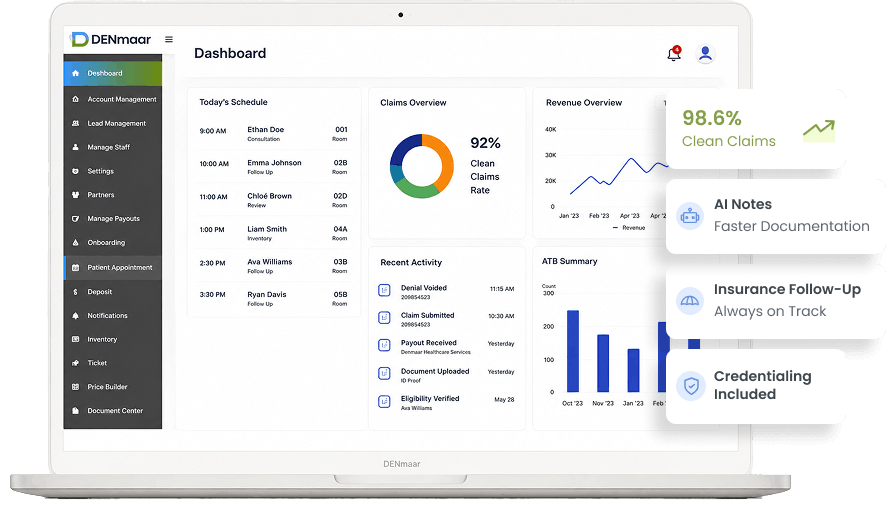
ONE INTEGRATED PLATFORM
Four Solutions. One Platform.
Everything growing behavioral healthcare organizations need to run a modern practice.
AI Clinical Documentation
Create therapy, psychiatry, group, and multidisciplinary documentation in minutes with AI designed specifically for behavioral healthcare.
Revenue Cycle Management
Professional insurance billing, payment posting, denial management, patient responsibility, eligibility verification, credentialing, and financial reporting.
More than software.
A complete revenue cycle solution.

AI Practice Automation
Administrative work should happen automatically whenever possible.
Insurance Knowledge Team
Healthcare reimbursement is constantly changing. DENmaar includes access to an expanding insurance knowledge platform built specifically for behavioral healthcare.
Get guidance on:
- Coding
- Prior authorization
- Documentation
- Claim resolution
- Medical necessity
- Credentialing
- Insurance requirements
- Best practices
Built from thousands of real-world behavioral health billing scenarios.

BUILT TO SCALE WITH YOU
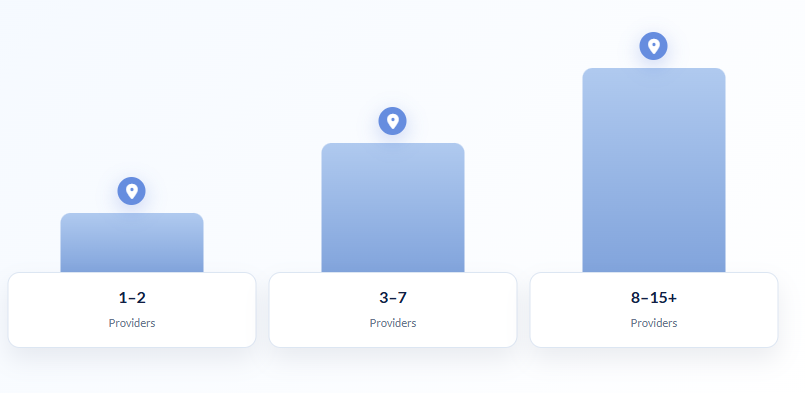
Designed for Growing Practices
Whether you’re adding your second provider or expanding into multiple locations, DENmaar grows with your organization.
Start simple.
Get up and running quickly with the essentials.
Add capabilities
Unlock advanced features as your needs grow.
Never outgrow
A platform that scales with your vision.
THE DENMAAR DIFFERENCE
Why DENmaar?
Most vendors sell software. Others sell billing services. DENmaar combines technology, AI, revenue
cycle management, and behavioral health expertise into one integrated platform.
Most vendors sell software.
Technology without the operational expertise to connect the pieces.
Others sell billing services.
Services without the intelligent platform to automate your practice.
DENmaar combines it.
Technology, AI, revenue cycle management, and behavioral health expertise into one integrated platform.
Enterprise Capability.
Small Practice Simplicity.
Schedule Your Personalized Demo
See how DENmaar can help your practice grow with confidence.
Let’s Determine Whether There Is Operational Alignment
We begin with a discussion focused on:
- Organizational structure
- Insurance workflows
- Operational goals
- Implementation fit
Request Information
Capterra, Software Advice And Get App 2023 / 25
Best Of Badges Awarded To DENmaar
2023 / 25 “Best of” badge winners = DENmaar Neuro has earned a well-deserved Best Value Badge.
See our reviews for our software being recognized as an impactful solution for your business.





Our Latest Blogs

A Connected Operating Model for Behavioral Health Practices: The Patient to Payment Cycle
A behavioral health practice does not operate as a collection of separate departments. A patient enters through a call, a message, a referral, or an online request. That interaction starts a chain of work that continues through scheduling, insurance, care, documentation, billing, and payment.
Most technology divides that chain into separate tools and queues. The front office answers the call. A scheduler books the appointment. Clinical staff document the service. Billers determine whether the claim can be submitted. When information is missing, people send messages, update spreadsheets, and wait for replies.
The problem is not that each person failed to do a task. The problem is that no system owns the complete journey. DENmaar calls that journey the Patient-to-Payment Cycle. It provides one operating model for moving every patient from first contact through completed care and collected revenue.
One Operating Model for Behavioral Health
The Patient-to-Payment Cycle connects patient access, clinical operations, and revenue cycle management. Each step prepares the next one. Information captured during the first conversation should support scheduling. Scheduling should initiate intake and insurance verification. The completed visit should trigger documentation, claim validation, submission, payment posting, and follow-up.
When these functions share the same workflow, staff no longer need to reconstruct what happened. The system can show the current status, identify what is missing, assign the next action, and measure the revenue affected by a delay.
AI Receptionist Begins the Cycle
The AI Receptionist is the front door. Its purpose is broader than answering the telephone. It should recognize the patient’s need, identify whether the practice can serve that patient, match the request to the right provider, schedule the appointment, collect insurance information, and begin intake.
A standalone voice assistant can take a message. An integrated receptionist can act on the practice’s real operating information: provider availability, specialties, state licenses, accepted plans, appointment rules, and service requirements. That difference determines whether automation reduces work or merely creates another queue for staff to review.
The Visit Must Be Ready Before It Begins
An appointment on the calendar is not necessarily ready for care. Eligibility may be inactive. Authorization may be missing. The selected provider may not be enrolled with the patient’s plan. Intake forms or insurance cards may still be incomplete.
A connected system should identify those issues before the appointment. Routine gaps can trigger automated reminders or requests. Only unusual situations should reach staff. This allows the practice to protect the patient’s experience while reducing the manual work that normally surrounds each visit.
Documentation Becomes Part of Revenue Integrity
Clinical documentation is often treated as a separate obligation. In practice, it is one of the conditions required for payment. The provider needs a clear work area showing today’s patients, notes due, treatment plans requiring review, assessments, authorization limits, and supervisor signatures.
AI-enabled practice operating systems can help draft and organize documentation, but the larger benefit comes from placing that assistance inside the operating workflow. The system should know which document is required, why it matters, and whether the encounter is ready to become a claim.
Clean Claims Start Before Submission
Traditional billing processes often discover problems after a payer rejects or denies the claim. The Patient-to-Payment Cycle moves that intelligence earlier. Before submission, the system can check eligibility, authorization, provider enrollment, required documentation, procedure codes, and modifiers, place of service, diagnosis compatibility, duplicates, and filing deadlines.
After submission, the same workflow should monitor acknowledgments, remittances, rejections, denials, underpayments, and stalled claims. When intervention is required, the system should explain the problem, recommend the next action, and route it to the right person.
People Should Manage Exceptions
Reducing administrative work does not require removing people from the process. It requires using their judgment where it has the most value. Routine, high-confidence actions can occur automatically. Unusual situations can be prepared for one-click approval. Complex clinical, payer, or credentialing issues can be escalated with the relevant information already assembled.
This changes the daily question from what work is waiting to what requires human judgment. Practice leaders gain a clearer view of blocked revenue, repeated workflow failures, provider bottlenecks, and the percentage of appointments reaching payment without billing intervention.
The System Improves Through Use
Every completed cycle produces useful operational knowledge. The platform learns which payer rules matter, which documentation gaps delay claims, which rejection patterns recur, and which actions lead to payment. Over time, work can move from manual handling to recommended action and then to automation.
That accumulated payer and workflow knowledge is more durable than any individual AI feature. It reflects the real behavior of behavioral health practices, providers, patients, claims, and insurance plans inside one connected process.
A Simpler Standard for Practice Technology
Behavioral health practices operating system should expect their technology to do more than store records and present task lists. The platform should actively move work forward, complete routine actions, and bring people into the process when their attention is genuinely needed.
The Patient-to-Payment Cycle gives DENmaar a clear standard for every product decision: does this capability help a patient reach care and help the practice collect the revenue earned for that care? When the answer is yes, it belongs in the core operating system.
DENmaar connects patient access, clinical workflow, insurance intelligence, and revenue cycle operations in one behavioral health platform.
Learn how DENmaar can help your practice manage the complete Patient-to-Payment Cycle.
Frequently Asked Questions
What is an operating model for behavioral health?
An operating model for behavioral health connects patient access, clinical care, insurance, billing, claims, and payment in one workflow.
What is the Patient-to-Payment Cycle?
It connects the patient’s first contact with scheduling, care, documentation, billing, claims, and collected revenue.
How can AI improve behavioral health workflows?
AI can automate routine work, identify missing information, organize tasks, and help staff focus on exceptions requiring human judgment.
Why should claims be checked before submission?
Pre-submission checks can identify eligibility, authorization, documentation, coding, and other issues before they cause claim delays or denials.
What should behavioral health technology connect?
It should connect patient access, scheduling, clinical documentation, insurance, billing, claims, credentialing, and revenue cycle operations.
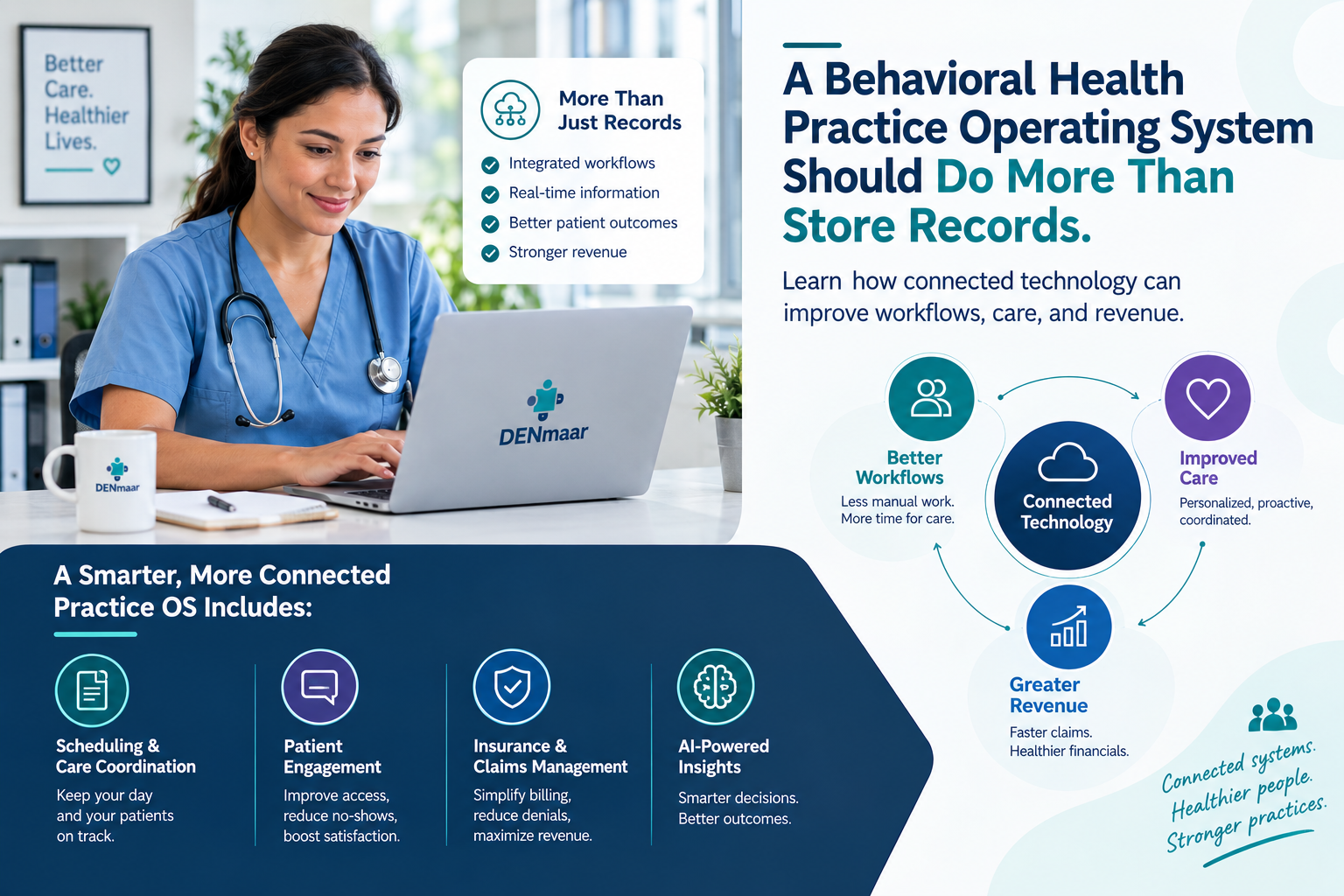
Your EHR Should Help Run the Practice, Not Just Store the Record
For years, electronic health records have been designed primarily as storage systems.
They store patient demographics, appointments, insurance information, assessments, treatment plans, progress notes, and billing records. That was an important improvement over paper charts, but it is no longer enough.
Behavioral health practices don’t simply need a place to keep information. They need a system that understands what the information means, recognizes what needs to happen next, and helps move the practice forward.
The future of the EHR is not a larger database with more menus.
It is an intelligent operating system for the practice.
The Real Work Is Often Invisible
A provider may finish a session, but that does not mean the work is complete.
The progress note may still need to be signed. The treatment plan may require an update. An authorization could be approaching its limit. A supervisor may need to review the documentation. The patient’s insurance may have changed. A claim could be waiting on a correction that no one has identified yet.
Traditional EHRs record each piece of this information, but they rarely connect it into a clear workflow.
As a result, practices rely on spreadsheets, reports, emails, sticky notes, and staff members remembering what must happen next. The information exists, but the system is not helping the practice act on it.
That creates invisible administrative work throughout the organization.
Providers spend time searching for unfinished documentation. Billers investigate problems after claims are rejected. Administrative staff track authorizations manually. Owners look through multiple reports trying to understand the health of the practice.
A modern EHR should bring that work to the right person before it becomes a problem.
From Passive Records to Active Guidance
Imagine a provider starting the day with one intelligent work area that clearly shows:
- Notes that still need to be completed or signed
- Treatment plans that are due for review
- Assessments requiring follow-up
- Authorizations approaching their visit limits
- Documentation returned by a supervisor
- Patients whose clinical information requires attention
- Tasks that could delay billing or reimbursement
Instead of searching through the system, the provider immediately knows what requires attention.
Better yet, the provider should be able to ask the system a simple question:
“What do I need to complete today?”
That is where artificial intelligence becomes genuinely useful.
AI should not merely generate more words. It should understand the provider’s responsibilities, organize the work, identify missing information, and help the provider complete each task efficiently.
The goal is not to replace clinical judgment. The goal is to protect the provider’s time so that more of it can be spent exercising that judgment.
Treatment Plans Should Be Living Clinical Tools
Treatment plans are a good example of how disconnected many EHR workflows remain.
A patient completes standardized assessments. The clinician establishes a diagnosis. Goals and interventions are documented in the treatment plan. Progress is later described in individual notes.
Yet these elements often exist as separate documents with little meaningful connection between them.
An intelligent system should help the clinician create an evidence-based treatment plan using the patient’s diagnosis, presenting concerns, assessment results, and appropriate clinical approaches. It should then help measure progress against that plan over time.
If symptoms improve, the treatment plan should reflect that progress. If assessment scores worsen, the system should bring it to the provider’s attention. If the documentation is no longer aligned with the stated goals, the provider should know before an audit or payer review discovers it.
The treatment plan should guide care, not simply satisfy a documentation requirement.
Clinical Care and Billing Are One Continuous Workflow
Many EHR companies treat clinical documentation and billing as two separate activities.
In reality, they are part of one continuous process.
The appointment affects eligibility and authorization. The service provided determines the documentation requirements. The note supports the diagnosis and procedure code. The completed documentation supports the claim. The claim produces payment, or creates additional work when something is missing.
When these steps are disconnected, problems are discovered too late.
An intelligent practice system should identify potential issues before the claim is submitted. It should recognize missing documentation, incomplete insurance information, authorization concerns, coding inconsistencies, and other conditions that could delay reimbursement.
That is far more valuable than simply reporting a denial after it has occurred.
For practices that need additional support across this process, integrated behavioral health billing can help connect documentation, claims, and revenue-cycle activities.
The System Should Coordinate the Practice
The next generation of behavioral health technology must go beyond recordkeeping.
It should help coordinate:
- Patient intake and communication
- Scheduling and insurance verification
- Clinical assessments and treatment planning
- Provider documentation and supervision
- Authorizations and utilization
- Claims submission and follow-up
- Patient balances and collections
- Credentialing and payer participation
- Operational and financial performance
This does not mean overwhelming users with more dashboards.
It means presenting each person with the specific information and actions relevant to their role. Providers should see provider work. Billing staff should see billing work. Practice leaders should see the few issues and trends that require leadership attention.
The system should reduce complexity, not display it.
Building the Practice Operating System
At DENmaar, we believe the traditional EHR is becoming obsolete.
Behavioral health practices need more than software that documents what already happened. They need a platform that helps determine what should happen next.
That means combining clinical documentation, evidence-based treatment planning, provider workflow, patient communication, insurance knowledge, and revenue-cycle management into one coordinated system.
Our vision is straightforward:
The system should run the practice, not force the practice to run the system.
The behavioral health organizations that thrive will not be the ones with the most software. They will be the ones whose technology quietly organizes the work, protects their providers, strengthens clinical care, and keeps revenue moving.
That is what the EHR should have become long ago.
It is what we are building now.
Frequently Asked Questions
What is a behavioral health practice operating system?
It is a connected system that coordinates clinical, administrative, insurance, billing, and operational workflows.
How can an EHR help run a practice?
An EHR can guide tasks, identify missing information, connect workflows, and show staff what requires attention next.
Why should clinical care and billing be connected?
Connected workflows help identify documentation, authorization, insurance, and coding issues before they delay claim submission or payment.
How can AI support behavioral health providers?
AI can organize responsibilities, identify incomplete work, assist documentation, and reduce repetitive administrative tasks.
What should modern behavioral health technology provide?
Modern technology should connect patient access, documentation, billing, credentialing, insurance, and practice performance without unnecessary complexity.

AI in Behavioral Health Should Do More Than Write Progress Notes
Artificial intelligence is becoming common in behavioral healthcare, but most of the attention remains focused on one task: generating progress notes.
Documentation is an important use of AI. Providers spend too much time completing notes, updating treatment plans, and ensuring that clinical records support both continuity of care and payer requirements. AI can make that work faster and more consistent.
But documentation represents only one part of operating a behavioral health practice.
Practices also manage patient calls, intake, scheduling, insurance verification, provider responsibilities, claim preparation, billing follow-up, and revenue-cycle exceptions. When AI is limited to progress notes, the practice may save time in one area while continuing to struggle with disconnected systems and manual processes everywhere else.
At DENmaar, our goal is broader: apply AI across the connected work of the practice.
The Problem With Standalone AI Tools
Many AI products are designed to perform one isolated function. One product records a session. Another generates a note. Another answers the telephone. Another review claims.
Each product may be useful, but the practice is still responsible for connecting the information and moving the work forward.
A call must become an intake. The intake must become an appointment. The appointment must lead to completed documentation. The documentation must support a clean claim. The claim must be monitored until it is paid.
If each step takes place in a different system, the organization still depends on staff members to transfer information, recognize problems, and determine what needs to happen next.
Adding more software does not necessarily make the practice easier to operate.
AI in Behavioral Health Works Better Inside a Connected Platform
DENmaar combines the EHR, scheduling, clinical documentation, billing, credentialing, and operational support within one behavioral health platform.
This creates an opportunity to use AI differently.
Instead of treating AI as a separate application, we can introduce it directly into the workflows where clinical, administrative, and financial work already occurs.
Information gathered during patient intake can support scheduling and documentation. Clinical documentation can contribute to claim readiness. Claims data can guide billing follow-up. Operational information can help leadership identify where work is becoming delayed.
The value comes not only from what the AI can generate, but from its ability to help connect one stage of the practice to the next.
AI-Assisted Clinical Documentation
Clinical documentation remains one of the clearest and most immediate uses of AI in behavioral health.
DENmaar uses AI to assist with documentation such as:
- Biopsychosocial assessments
- Individualized treatment plans
- Measurable goals and objectives
- DAP, SOAP, and BIRP progress notes
- Psychiatry and medication-management notes
- Group and multidisciplinary documentation
- Clinical assessments and outcome measures
- Continuity between treatment plans and subsequent notes
The objective is not simply to produce text faster. It is to help providers create documentation that reflects the patient’s treatment, active goals, clinical progress, and applicable assessments.
Providers remain responsible for reviewing, editing, and approving AI-assisted documentation before it becomes part of the signed clinical record. AI supports clinical work; it does not replace clinical judgment.
AI at the Front Door of the Practice
The patient experience often begins before an appointment is ever scheduled.
Prospective patients call with questions about services, provider availability, insurance, locations, and appointment times. When staff members are busy or the office is closed, those opportunities can be lost.
The DENmaar AI Receptionist is designed to support the work surrounding that first contact, including:
- Responding to incoming calls
- Collecting new-patient information
- Handling common practice questions
- Supporting appointment and rescheduling requests
- Collecting preliminary insurance information
- Routing patients by provider, location, or service
- Preparing call summaries
- Identifying the appropriate next step for staff
Because the receptionist is being connected to the DENmaar platform, the information collected can move into the practice workflow instead of remaining inside a separate answering service.
The long-term objective is a smoother path from initial contact to registration, scheduling, insurance review, and care.
AI for Provider Workflow
Providers should not have to search multiple screens to determine what requires their attention.
An upcoming appointment may have an eligibility concern. A patient may be missing an assessment. A note may remain unsigned. A treatment plan may require an update. A supervisor may need to review documentation before a claim can move forward.
DENmaar’s Provider Work Area is being developed to bring these responsibilities into a more organized and prioritized view.
AI can help identify what is incomplete, explain why it matters, and direct the provider toward the appropriate action. Instead of presenting another collection of reports, the system can help answer a much more useful question:
What do I need to do next?
This is where AI can begin to reduce the daily friction providers experience inside traditional EHR systems.
AI in Claims and Billing Operations
Submitting a claim is only the beginning of the revenue cycle.
Billing teams must identify missing information, monitor payer responses, research problems, prioritize follow-up, and determine what action should be taken on each unresolved claim.
DENmaar’s Claims Copilot is designed to bring AI and operational intelligence into that process.
Potential applications include:
- Detecting missing or inconsistent claim information
- Identifying dependencies between documentation and billing
- Flagging claims requiring attention
- Organizing follow-up by urgency and financial impact
- Supporting denial and rejection analysis
- Recognizing recurring payer problems
- Recommending the next appropriate action
- Helping prevent avoidable submission delays
The goal is not to remove experienced billing professionals from the process. It is to give them clearer information, reduce repetitive research, and help them focus their attention where it will have the greatest impact.
Making Insurance Knowledge More Accessible
Healthcare reimbursement requirements are fragmented and constantly changing.
Rules may vary by payer, plan, state, provider type, service, location, and method of delivery. Staff members often search payer manuals, portals, internal notes, and previous claims to find an answer.
DENmaar is building an expanding insurance knowledge resource informed by real behavioral health billing situations.
This knowledge can support questions involving:
- Coding
- Prior authorization
- Medical necessity
- Documentation requirements
- Claim resolution
- Credentialing
- Telehealth
- Payer-specific policies
- Billing best practices
Bringing this knowledge closer to the workflow can help practices make better decisions without repeatedly starting the research process from the beginning.
AI for Practice Leadership
AI also has the potential to help owners and executives understand how the organization is operating.
When scheduling, provider activity, clinical documentation, claims, and collections exist inside a connected platform, leadership can gain better visibility into:
- Provider utilization
- Unfinished clinical work
- Workflow bottlenecks
- Claims waiting on documentation
- Recurring insurance problems
- Revenue-cycle exceptions
- Operational trends requiring intervention
The objective is not another dashboard filled with numbers. It is earlier recognition of the issues that could affect patient access, provider performance, or revenue.
One Patient Journey, Not a Collection of Features
The greatest opportunity for AI in behavioral healthcare is not found in any single feature.
A prospective patient contacts the practice. Information is collected and the patient is directed toward the right provider. Registration, patient insurance management, and assessments are completed. The provider documents the encounter. The documentation supports claim creation. The billing team addresses exceptions. Leadership monitors the performance of the organization.
These are not unrelated activities. They are stages of one connected patient and revenue journey.
That is why DENmaar is applying AI across the platform rather than treating it as a standalone documentation tool.
Building AI Carefully and Practically
AI in healthcare must be introduced with appropriate human review and clear responsibility.
Some DENmaar AI capabilities are available today. Others are in active development or being expanded through controlled pilots. We believe practices should know the difference.
Our approach is to show organizations what is currently working, explain what is being developed, and evaluate whether each workflow fits their actual operational needs.
The future of behavioral health technology is not simply an EHR with an AI button. It is a connected system that helps patients, providers, staff members, billers, and practice leaders move work forward with fewer delays and fewer disconnected steps.
That is the direction DENmaar is building toward: AI throughout the practice, applied where it can make the work clearer, faster, and easier to manage.
See How DENmaar Is Using AI Across Behavioral Healthcare
Learn how DENmaar connects patient access, clinical documentation, provider workflow, insurance knowledge, claims, and revenue-cycle operations within one platform.
Frequently Asked Questions
How is AI used in behavioral health?
AI can support documentation, scheduling, patient intake, insurance, billing, claims, and other behavioral health workflows.
Can AI replace behavioral health providers?
No. AI supports providers with repetitive tasks while clinical decisions and final documentation remain under human review.
How can AI improve behavioral health billing?
AI can flag claim issues, organize follow-ups, analyze denials, and help billing teams resolve problems faster.
Can AI help with patient insurance management?
Yes. AI can help organize insurance information and identify eligibility, authorization, and other coverage-related issues.
What are the benefits of AI in behavioral health?
AI can reduce manual work, connect workflows, improve visibility, and help practices manage patient care and operations more efficiently.
Our Partners






Ready to get started?
Feel free to reach out if you have any questions.
