A patient’s appointment may end at 10:50 a.m. The work connected to that appointment often continues long afterward.
There is a progress note to complete, a treatment plan to review, an assessment to follow up on, and sometimes a supervisor’s signature to obtain. Meanwhile, the next patient is waiting.
For behavioral health providers, this is where much of the daily friction lives: moving between screens, finding information, remembering outstanding tasks, and making sure each visit’s documentation is complete.
At DENmaar, we’re developing our Provider Work Area around a straightforward question:
How can the system help providers move through their day with less searching and less unfinished work?
A Clearer View of the Day
A schedule shows who is coming in. Providers also need to know what requires their attention before, during, and after those appointments.
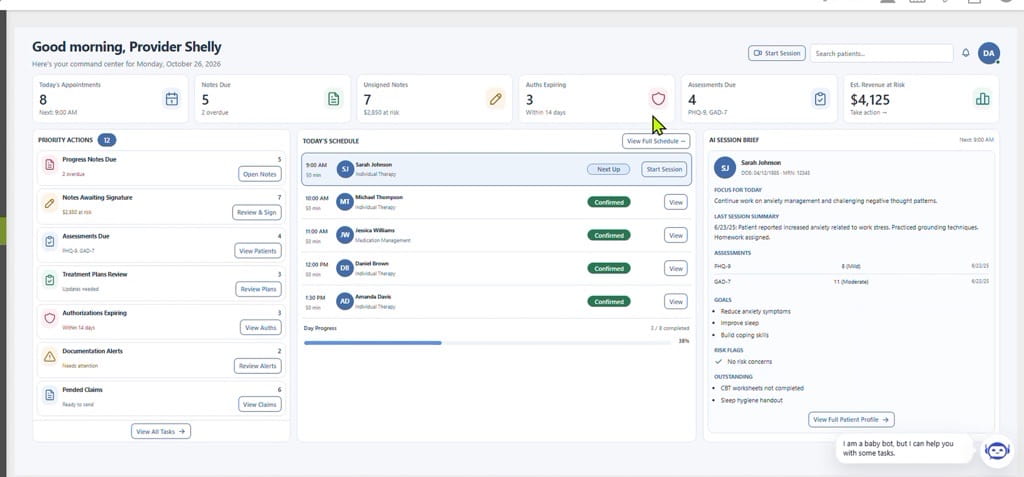
The Provider Work Area is being designed to bring those responsibilities together:
- Today’s appointments and session access.
- Progress notes that need completion.
- Documentation awaiting signatures.
- Assessments and treatment plans due for review.
- Authorizations approaching expiration.
- Outstanding items that can delay the next step in billing.
Bringing this information into one place gives providers a clearer starting point. It also makes work that can otherwise remain buried in individual patient records easier to see.
Prepare Without Retracing the Chart
Before a session, a provider may need to review the previous visit, treatment goals, recent assessments, and outstanding patient assignments.
Our planned AI session brief brings relevant information together beside the schedule, helping providers orient themselves before the appointment. The full patient record remains available for deeper review.
The purpose is to support preparation while keeping clinical judgment with the provider. Useful summaries need clear sources and dates, so providers can understand the information they are reviewing.
Turn Visibility Into Action
Seeing an overdue note is helpful. Being able to open that note and complete the next step is where the workflow becomes more useful.
That principle is guiding development across the Work Area. Each task should lead providers toward the work that needs to be done, with fewer steps between identifying an issue and resolving it. This approach aligns with broader AI workflow automation in behavioral health, where the goal is to help teams move outstanding work toward completion.
Supervisor coordination is part of that effort. When documentation requires review or a signature, the system should make the responsibility and status clear to the people involved.
Give AI A Practical Role
DENbot is being developed alongside the Provider Work Area to assist with supported tasks and help users find what they need.
We see the value of AI in everyday work: helping a provider prepare, locate information, understand an outstanding item, and move toward completion.
Its usefulness will depend on how well it fits those workflows. This is part of DENmaar’s vision for an AI-enabled practice operating system that connects everyday responsibilities and helps work move forward.
Build toward a more manageable workday
The Provider Work Area is currently in development, with a mid-November release target.
The picture shown here offers a look at that work in progress. The goal is a practical one: clearer priorities, easier preparation, smoother documentation, and fewer unfinished tasks carried into tomorrow.
An EHR should help providers finish the work connected to patient care—and make the day easier to manage.
For a conversation about your practice’s needs or to learn more about DENmaar, contact our team.