The New Compliance Reality
In behavioral health, clinical documentation has always been the backbone of care, but today, it’s also the backbone of insurance compliance.
Payers are tightening audit criteria, requiring EHR documentation that clearly demonstrates medical necessity, progress toward measurable treatment goals, and evidence of ongoing outcome assessment.
For many mental health practices, that means treatment plans and progress notes can no longer be purely narrative, they must tie directly into quantifiable, data-driven outcomes supported by measurement-based care (MBC).
1. The Shift: From Clinical to Clinically Compliant
During a recent discussion with a partner clinic, the conversation turned toward treatment plan design and how it must now align with insurance compliance requirements.
The reality is:
- Insurers want clear, quantifiable goals.
- They want evidence of progress toward those goals.
- And they want it in a consistent, audit-ready format.
That’s where many EHR software systems fail — they are designed for data storage, not data compliance.
The need now is for behavioral health documentation software that integrates measurement-based care, turning every note into a compliance-ready record.
2. Where Measurement-Based Care (MBC) Changes Everything
Measurement-Based Care (MBC) brings structure and defensibility to clinical documentation.
When you connect outcome measures (like PHQ-9, GAD-7, ASRS, etc.) directly to the treatment plan, every progress note and goal update becomes measurable, defensible, and audit-ready.
This transforms compliance from an afterthought into a built-in system:
- Assessments inform treatment goals.
- Treatment goals flow into progress notes.
- Notes link directly to payer-recognised outcomes through your mental health EHR software.
With MBC, documentation does not just prove care was delivered; it proves care was effective. It is the foundation of data-driven behavioral health practice management.
3. The AI Advantage: Audit-Ready Without the Burden
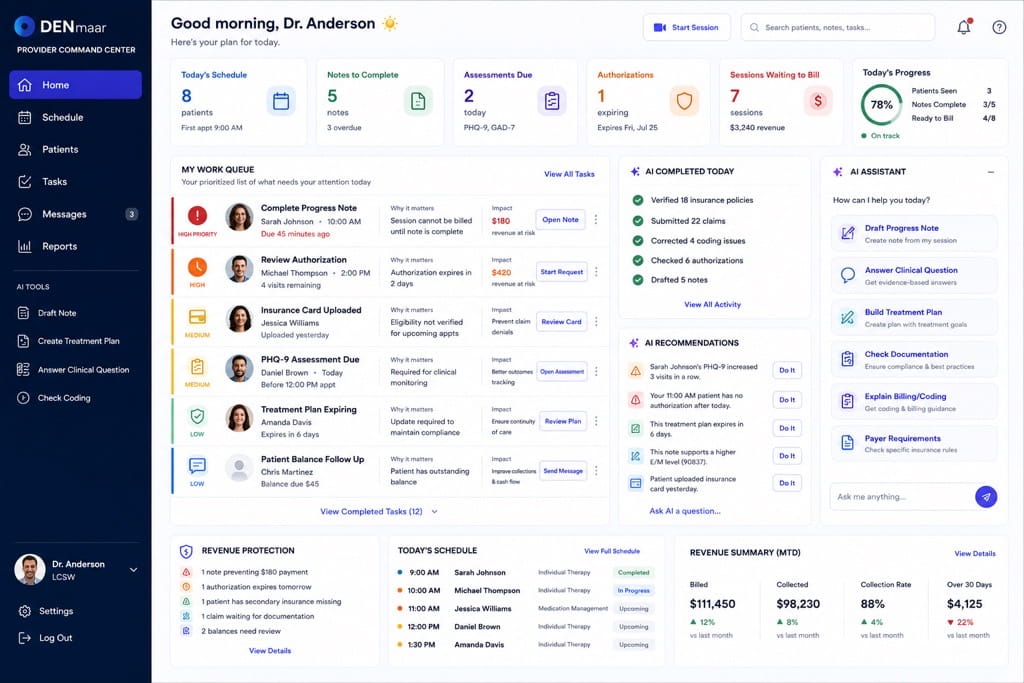
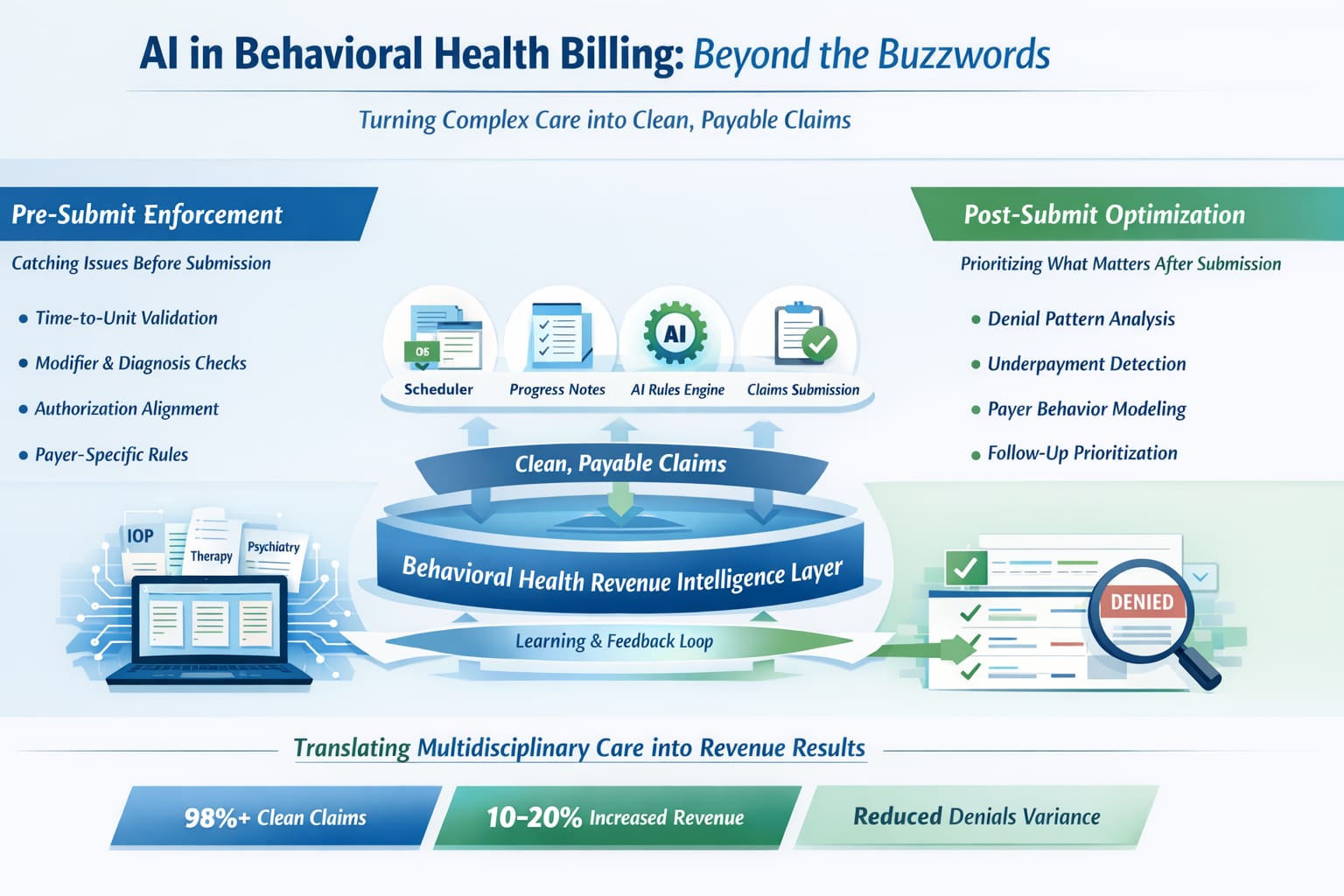
At DENmaar, we’re extending Measurement-Based Care into AI-powered clinical documentation to make compliance seamless and efficient:
- AI-assisted treatment planners that recommend measurable objectives based on diagnosis and level of care.
- Automated progress note generation that ties interventions and outcomes to those objectives.
- Real-time compliance alerts that flag missing or outdated assessments before audits do.
The result: clinicians can document faster, stay insurance-compliant, and focus on patient care — not paperwork.
Our mental health practice management software blends AI, MBC, and compliance tools to keep practices efficient and audit-ready by default.
Why This Matters for Practice Growth
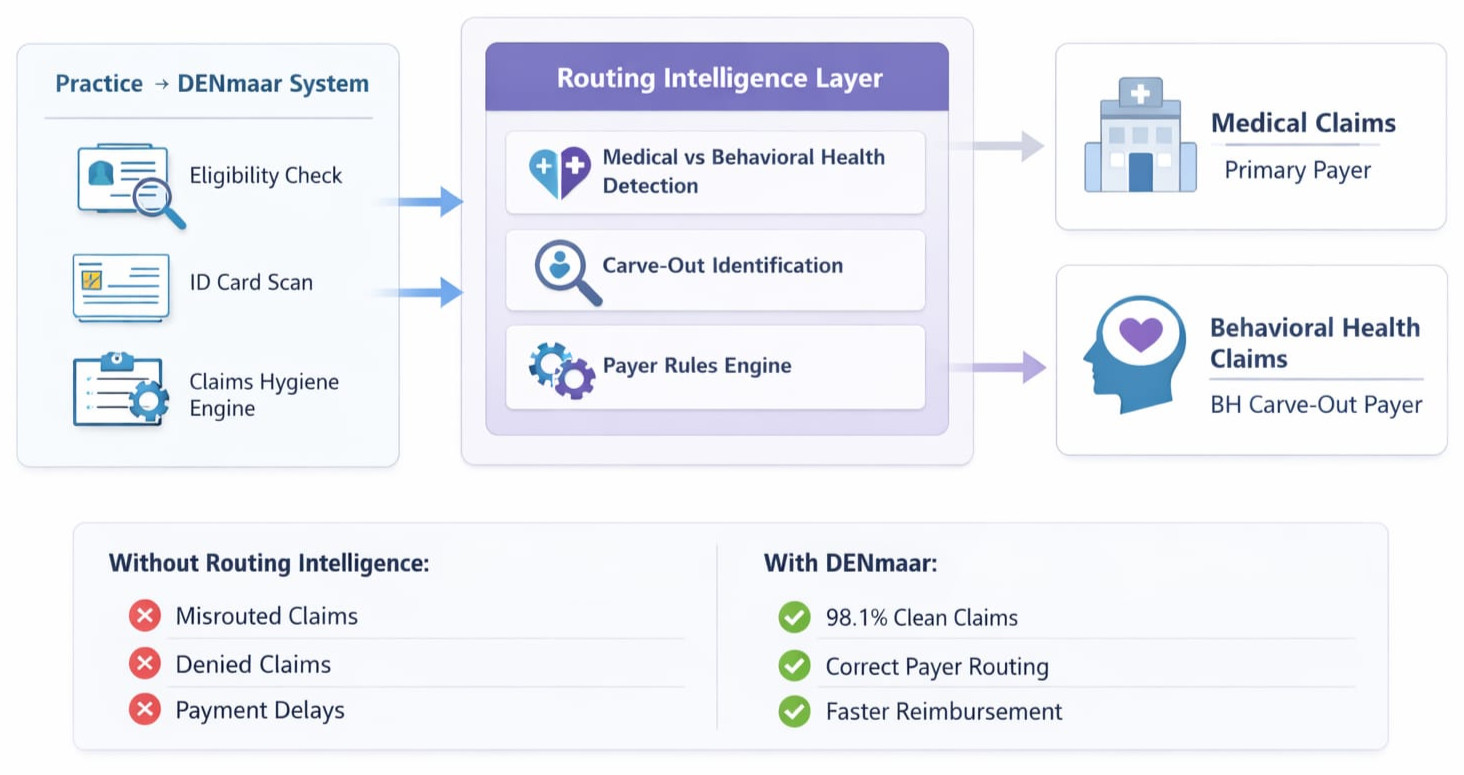
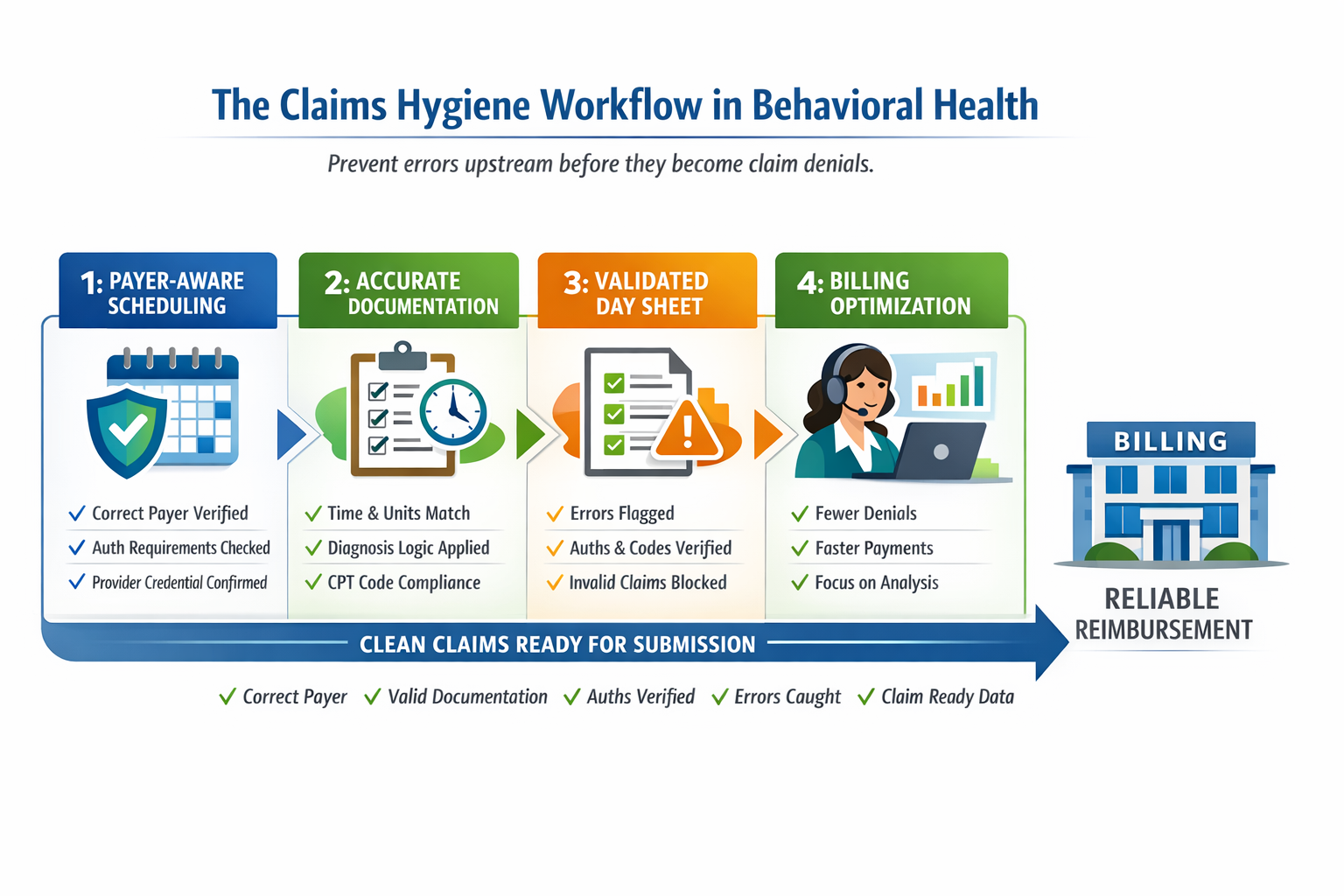
Practices that master documentation compliance are not just avoiding denials, they are building credibility with payers and scalability in operations.
Insurance-compliant documentation reduces rework, protects revenue, and strengthens trust that accelerates credentialing and reimbursement cycles.
MBC-driven compliance is no longer optional, it is the new framework for sustainable practice management in behavioral health.
Conclusion: Turning Compliance Into Confidence
The best systems do not just collect data — they use it to prove clinical and financial integrity.
At DENmaar, we’re aligning Measurement-Based Care (MBC), AI automation, and EHR documentation design to make every treatment plan and note insurance-compliant by default — not by extra effort.
With DENmaar’s mental health EHR software, compliance becomes confidence, and every documentation step becomes a driver of growth.