Behavioral Health Documentation Workflow
The Session Is Over. Why Isn’t Work?
The patient leaves. The next appointment is about to begin. But the work from the last session is still waiting.
There is a progress note to complete, a treatment plan to review, perhaps a supervisor signature to obtain, and information the billing team needs before a claim can move forward.
For behavioral health providers, the appointment is only one part of the job. What happens afterward can determine how much work follows them home—and how smoothly the practice operates.
Behavioral Health Documentation Workflow: The Gap Between Seeing a Patient and Finishing the Work
Consider a familiar situation: a provider finishes a session, returns to the schedule, opens the patient chart, finds the correct note, and begins documenting. An interruption comes. The note stays unfinished.
Later, someone must identify what is missing. A supervisor may need to review it. Billing may need clarification. Each person spends time finding the next step before they can take it.
Repeated across a busy practice, these small delays accumulate.
The opportunity for better software starts here: make the next step easier to see and complete.
Put the Next Action Within Reach
After a session, the provider should be able to move directly into the relevant documentation, with the patient and appointment context already connected.
An unfinished note should remain visible. A required signature should reach the right reviewer. A billing issue should have a clear owner.
These connections matter because a practice’s work passes through several hands. Providers, supervisors, front-office staff, and billing teams each need a clear view of their responsibilities—and a reliable way to hand work to the next person.
Give AI a Useful Place in the Process
AI has potential to help with documentation and administrative work. Its value depends on where it fits into the day.
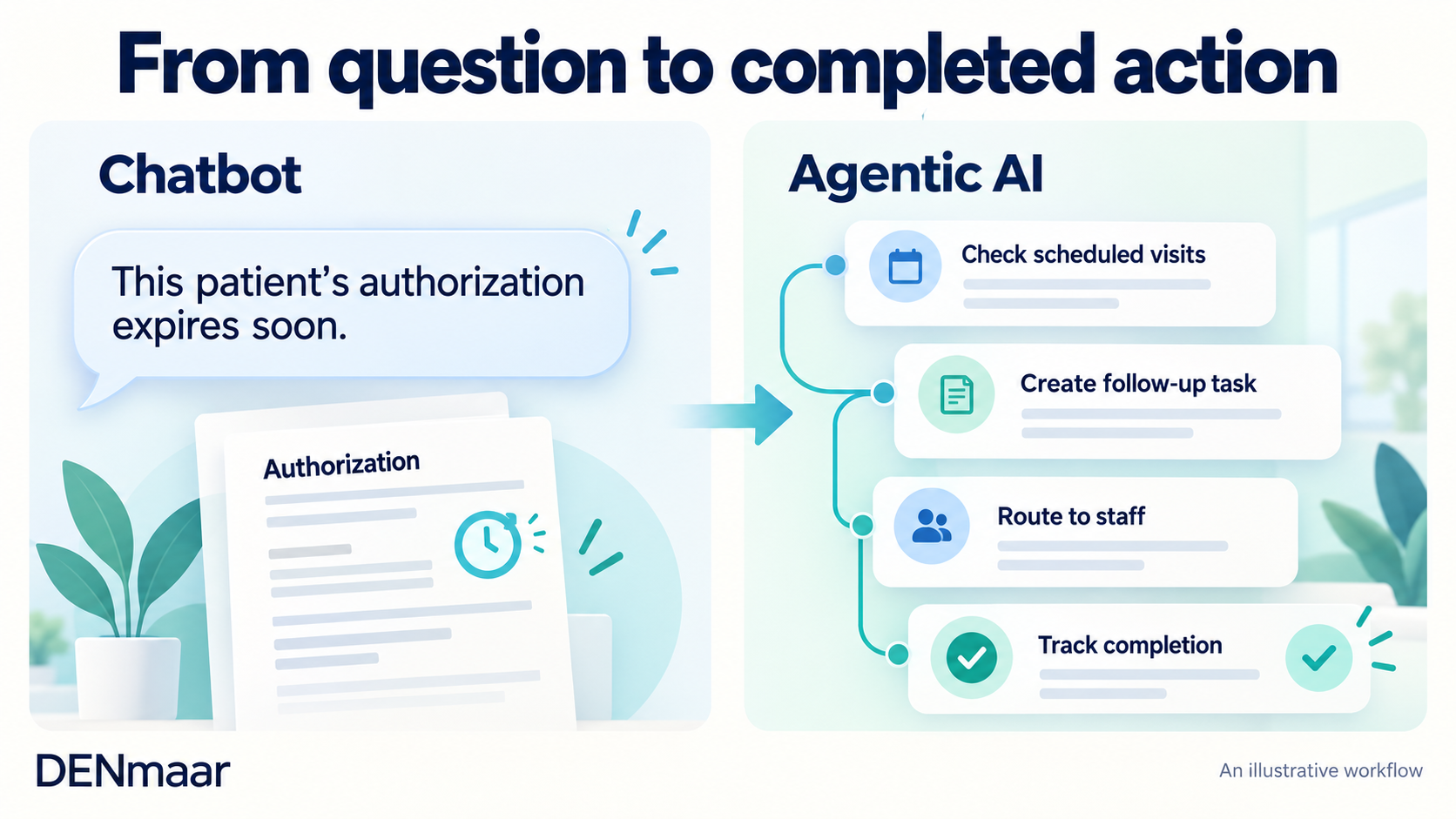
Can it help a provider complete the task already in front of them? Can it surface relevant information without creating another search? Can it support a handoff while keeping the responsible person in control?
Those are the questions guiding DENmaar’s approach to AI-enabled workflows.
What DENmaar Is Building Toward
DENmaar’s upcoming Provider Work Area is being developed around a practical goal: bring providers’ daily responsibilities together so they can see what needs attention and move through their work more easily.
The planned integration of DENbot supports that direction, bringing AI assistance closer to the work providers are doing.
Our broader focus connects clinical documentation, practice operations, and insurance billing. Improving those connections can help work move from the completed appointment toward a completed note, the appropriate review, and billing readiness.
A useful measure of progress is simple:
When the last patient leaves, how much work is still waiting?
At DENmaar, that question helps guide what we build next.
Want to see how DENmaar connects clinical workflows and billing? Schedule a conversation with our team.
Learn more about AI in EHR and revenue cycle management and how AI could help move approved workflows forward.